This post is all about Kitchen Pantry Door Storage.
A well‑designed kitchen makes everyday life easier, and that’s exactly where kitchen pantry door storage comes in. It’s one of those clever interior design tricks that turns overlooked space into something functional, organised, and effortlessly stylish.
In this guide, we’ll explore creative ways to use your pantry door for storage, not just for functionality, but also for design harmony. You’ll learn practical ideas for different kitchen styles, expert tips on how to choose and style your setup, and a few insider design tricks that make all the difference. Whether your kitchen is compact or spacious, these ideas will help you find more room and create a cleaner, more cohesive space that feels like your own.
This post is all about Kitchen Pantry Door Storage.
Why Kitchen Pantry Door Storage Matters
The great thing about kitchen pantry door storage is that it’s one of the easiest ways to reclaim usable space without changing the basic layout of your kitchen. It’s efficient, cost‑effective, and instantly rewarding. Most people underestimate how much vertical space a standard pantry door provides, yet that’s exactly where some of your most frequently used items could live.
From a design perspective, it’s not just about squeezing in a few extra shelves. It’s about creating a more intuitive kitchen, one where function meets form. A well‑designed door storage system naturally streamlines your cooking routine by keeping essentials within reach while visually decluttering countertops and cupboards. That interplay between ease and order makes a noticeable difference, especially in smaller kitchens or open‑concept layouts where every detail contributes to the overall look and flow of the space.
If you’re short on storage or simply want your pantry to look and feel more intentional, start by assessing your door. Think about what you access most: spices, condiments, snacks, or cleaning supplies, and imagine how they could be arranged vertically, rather than stashed away in a deep shelf. It’s a small adjustment that often creates a big impact.
Types of Kitchen Pantry Door Storage Solutions
The key to creating effective kitchen pantry door storage is matching the right type of organiser to your space and lifestyle. There isn’t a one‑size‑fits‑all approach here; what works well in a busy family kitchen might not be ideal for a small apartment. Let’s look at a few reliable solutions that blend functionality with style.
1. Over‑the‑Door Racks and Organisers
For most kitchens, over‑the‑door racks are the easiest entry point into door storage. They’re simple to install, usually with no drilling required, and they make excellent use of the door’s height. You’ll find them in a variety of materials, from sleek chrome to matte black finishes, which means they can blend seamlessly with nearly any interior style.
If you’re tight on pantry shelf space, these racks can hold anything from spices and snacks to smaller cooking oils or jars. They’re especially handy for renters who can’t make permanent changes, but still want functional, attractive pantry door storage.
2. Custom Door Shelving
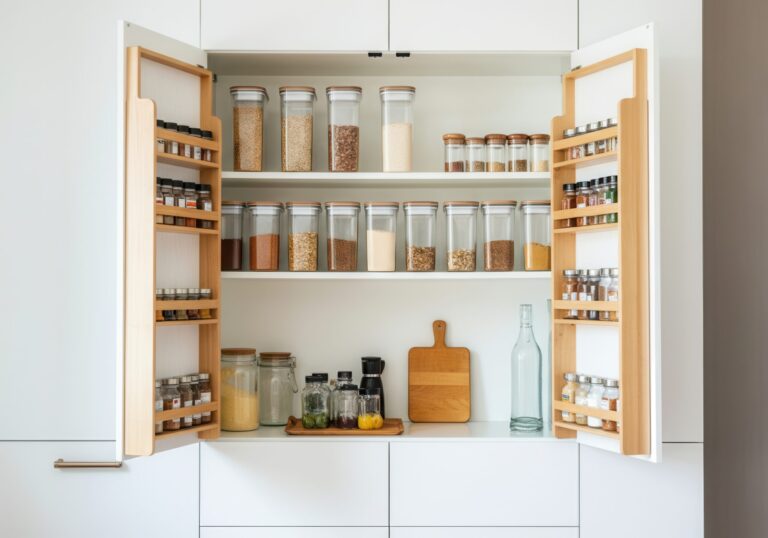
If you’re after something more built‑in and cohesive, custom door shelving is a smart investment. These can be designed to match your cabinetry, giving your pantry a polished, integrated look. Custom setups also tend to handle heavier items, such as canned goods or glass jars, without wobbling or warping over time.
From an interior design perspective, custom shelving allows you to maintain consistency in colour, finish, and overall kitchen aesthetic. It’s also a chance to get creative: you can play with shelf depths, mix open racks with bins, or even add discreet built‑in lighting for a soft glow when you open the door.
3. Hanging Baskets and Hooks
Sometimes, a simple solution is all you need. Hanging baskets or hooks on the inside of your pantry door are perfect for frequently used items, small produce bags, cleaning gloves, or lightweight kitchen tools. Wire baskets offer a more open, airy look, while woven styles can add warmth and texture to your kitchen pantry door storage setup.
If you like a natural, lived‑in aesthetic, this approach is both functional and visually appealing. It’s also easy to adjust or rearrange as your storage needs change.
4. Magnetic or Pegboard Systems
For those who prefer a clean, modern, or industrial design style, magnetic and pegboard setups can be game‑changers. Magnetic panels are excellent for holding metal spice tins or small tools, while pegboards create a flexible system that can be rearranged whenever you want to refresh your layout.
What’s great about these systems is how customisable they are. You can add shelves, hooks, or small containers as needed, all while keeping a sleek, minimalist profile that suits contemporary kitchens perfectly.
When you choose the type that best fits your space, you set the foundation for a pantry that truly works for you. The next step is refining which design will complement your kitchen’s layout and overall aesthetic.
How to Choose the Right Pantry Door Storage for Your Kitchen
Selecting the right kitchen pantry door storage solution depends on more than just the available space; it’s about how you use your kitchen day‑to‑day and what kind of look you want to achieve. A well‑chosen setup should feel like it belongs, not simply like an add‑on. Here’s how to make that decision with intention and confidence.
1. Start by Measuring and Assessing Your Space
Before buying or installing anything, measure your pantry door’s height and width carefully. Check how much clearance you have when the door opens fully, especially if it swings near cabinets or appliances. These small details determine how deep your shelves or baskets can be without causing frustration later on.
If you’re working with a sliding or French pantry door, you’ll have to get a little creative. In those cases, look for slim, low‑profile organisers or interior‑mounted systems that don’t interfere with door movement.
2. Define the Purpose of Your Door Storage
Think about what items you reach for every day. Are you looking to organise spices, snacks, or baking supplies? Maybe you need a home for cleaning products or reusable grocery bags. Defining the purpose will help you choose the right structure: narrow spice racks for small containers, deeper wire shelves for snacks, or hooks for lightweight tools.
The beauty of kitchen pantry door storage is that it can adapt to meet your exact needs. When you treat the door as another functional part of your design, it becomes an organiser that helps you move through your kitchen more efficiently.
3. Consider Weight and Durability
It’s tempting to load every inch of your new pantry door with jars and cans, but keep balance in mind. Check the weight limits of your chosen storage system and avoid overloading. Over‑the‑door racks and hanging baskets are intended for lighter items, while custom shelving can handle heavier products more comfortably.
Choosing durable materials, like metal with a powder‑coated finish or sturdy wood, ensures your investment lasts. And since kitchen environments can get humid, particularly near cooking areas, opting for moisture‑resistant finishes can help maintain your system’s appearance over time.
4. Align with Your Kitchen’s Overall Style
Even functional storage deserves to look good. Think about your kitchen’s colour palette, hardware, and overall style. Matte black racks blend seamlessly into modern designs, while natural wood tones complement rustic or transitional interiors. Clear acrylic bins can also add a more streamlined, contemporary touch.
Your kitchen pantry door storage doesn’t have to stand out; it should flow naturally with the rest of your space. Done right, it becomes an understated design element that quietly enhances both practicality and aesthetics.
Once you’ve narrowed down your options, it’s time to focus on the fun part, styling. The next section will dive into how to add personality and polish to your pantry door system while keeping it functional and well-organised.
Design and Styling Tips for a Cohesive Look
Good kitchen pantry door storage isn’t just about adding shelves and baskets; it’s about creating visual harmony. The best storage setups look intentional, as if they were always part of your kitchen’s design, not something you attached later. This section focuses on how to style your pantry door so it feels both functional and aesthetically refined.
1. Keep It Cohesive with Colour and Material
Start by aligning your storage materials with your kitchen’s existing finishes. If you have warm wood cabinetry, consider natural wood or woven baskets to tie the look together. In a modern space with clean lines and cooler tones, you might lean toward matte metal, acrylic, or glass containers for a streamlined effect.
This simple attention to tone and texture keeps your pantry door storage from looking like a random collection of organisers. Instead, it becomes a natural extension of your design story.
2. Label Everything (But Keep It Subtle)
Labels aren’t just functional; they can also add a touch of design polish. Simple, uniform labelling gives your pantry a clean, professional look and helps everyone in the household keep things organised.
Use minimal typography or clear adhesive labels for a modern, uncluttered aesthetic. Chalkboard tags or handwritten labels can soften the look if you prefer something more casual.
3. Mix Open and Closed Storage
Balance is key when it comes to door organisation. Open shelves keep frequently used items within easy reach, while small bins or baskets can hide less attractive essentials, like refills, packets, or snacks.
If you want to maintain visual calm, stick to three or four container styles that coordinate but don’t perfectly match; this creates visual interest without looking busy. Remember, your kitchen pantry door storage should support both order and beauty.
4. Add Lighting for Function and Ambience
A bit of lighting can elevate even the simplest setup. Battery‑powered LED strips or motion‑activated puck lights can instantly make your pantry feel more luxurious. Not only do they make it easier to see what’s on each shelf, they also highlight your organisation system, subtly turning a practical feature into a design detail.
Lighting is particularly useful if your pantry is in a darker corner of the kitchen. When thoughtfully placed, it adds both visibility and warmth, making the space feel more inviting.
A well‑styled pantry door not only saves space but also enhances your kitchen’s overall look. It’s one of those small improvements that quietly elevates how a space feels to live in. Next, we’ll go over how to keep everything functional and tidy in the long run.
Maintenance and Organisation Tips
Once your kitchen pantry door storage is set up and looking great, keeping it organised is the real key to making it last. The goal isn’t perfection; it’s creating a system that stays functional and easy to maintain. With a few small habits, you can keep your pantry door as tidy as the day you installed it.
1. Declutter Regularly
Every few months, take a few minutes to reassess what’s hanging on the door. Items have a way of drifting into spaces simply because there’s room for them. Start by removing everything and giving the shelves or baskets a quick wipe‑down. Then, only put back what you actually use.
This periodic reset keeps your pantry door storage purposeful and prevents it from becoming another overstuffed corner of your kitchen.
2. Group Similar Items Together
Organisation works best when it’s intuitive. Keep breakfast items together, spices in one zone, and cleaning supplies in another. Grouping similar products reduces visual clutter and makes it easier to maintain the layout you worked hard to create.
If you’re using bins or baskets, label them so that every item has a clear home. Over time, these small details make the system effortless to keep up with.
3. Avoid Overloading Shelves
As practical as kitchen pantry door storage is, it still has its limits. Too much weight can strain hinges or cause racks to sag over time. Keep heavier products, like large jars or cans, on your main pantry shelves, and use the door for lightweight items.
Evenly distributing weight not only protects the door but also preserves its smooth operation, which adds to the longevity of your setup.
4. Refresh the Look Seasonally
A little refresh can go a long way in keeping your pantry door inspiring. Swap out bins, update labels, or add new shelf liners for a quick change. This can be as simple as introducing different materials, like woven textures in summer or dark metal finishes in winter, to subtly update your kitchen’s appearance without a full redesign.
This small maintenance step not only keeps the space feeling fresh but also makes you more likely to stay organised.
Maintaining a clean and organised kitchen pantry door storage system doesn’t need to be a chore. With mindful upkeep and a clear structure, your pantry will continue to serve as both a design feature and a functional space for everyday living.
Budget-Friendly vs. Custom Solutions
One of the great things about kitchen pantry door storage is its flexibility; you can create a stylish, organised system on just about any budget. Whether you prefer simple DIY upgrades or want a fully integrated custom design, there’s a smart solution that fits your space, aesthetic, and lifestyle.
1. Budget-Friendly and DIY Options
If you’re starting small or working within a modest budget, there are plenty of ways to make a big impact without spending much. Over‑the‑door racks, adhesive hooks, or adjustable baskets can all transform your pantry door in a single afternoon.
These ready‑made options are ideal if you rent your home or simply want an affordable, low‑commitment way to test how door storage works for your routine. Many of these systems can be adjusted or layered over time, which makes them both cost‑effective and adaptable.
To make a DIY approach feel polished, stick to a cohesive colour scheme and consistent container style. It’s not about how much you spend, it’s about thoughtful design choices that make even simple materials look intentional.
2. Semi-Custom Systems
Semi‑custom options are a great middle ground. You can purchase modular storage components, like adjustable shelving systems or pegboard panels, and configure them to your exact space. Many brands now offer kits that can be mixed and matched, giving you the flexibility of customisation without the price tag of a fully bespoke installation.
Visually, semi‑custom systems also elevate your pantry’s look. Choose finishes and details that echo your kitchen hardware for a coordinated feel without needing professional carpentry.
3. Custom-Built Door Storage
If long‑term quality and seamless aesthetics are your priorities, investing in custom pantry door storage can be well worth it. A professional design allows you to match cabinetry finishes exactly, optimise every inch of usable space, and accommodate heavier or specialty items with ease.
Custom builds also open creative opportunities; hidden lighting, built‑in pullouts, or even soft‑close shelving can make your pantry door feel like a true design feature. While the upfront cost is higher, the end result often adds both daily convenience and long‑term value to your kitchen.
When choosing between budget, semi‑custom, or fully custom solutions, think about your long‑term goals. If your home is temporary or frequently updated, a modifiable system is likely the best fit. If you’re designing your forever home, a tailored, built‑in approach can be an investment that continues to pay off for years.
What makes kitchen pantry door storage so satisfying is how transformative it can be without requiring a full renovation. With a bit of planning, you can reinvent one of the kitchen’s most overlooked surfaces into something both useful and beautiful. Whether you choose simple over‑the‑door baskets or a custom-built-in system, every well-organised inch adds to your kitchen’s comfort and flow.
This post is all about Kitchen Shelving Unit With Doors.
Good kitchen design, at its core, is about balance: finding practical storage solutions that also enhance the way a space feels. A kitchen shelving unit with doors is one of those pieces that makes a noticeable difference; it keeps the essentials close at hand while concealing the items you don’t want on display. The result is a kitchen that feels calm, streamlined, and put together.
This guide will explore why choosing a shelving unit with doors is such a smart investment, the different types and styles available, how to position them within your space, and what to look for before you buy. Whether you’re working with a compact kitchen or a generous floor plan, there’s a way to maximise storage without adding clutter.
Why Choose a Kitchen Shelving Unit With Doors?
A kitchen shelving unit with doors offers more than just a place to put things; it changes how your kitchen functions day to day. Behind closed doors, you can store away the less photogenic items: mismatched mugs, small appliances, or stacks of pantry goods. By removing visual clutter, the kitchen immediately feels more spacious and thoughtfully designed.
From a designer’s perspective, one of the biggest advantages of these units is their ability to define a cleaner visual rhythm in the room. Instead of open shelves that often look overcrowded, a unit with doors gives you control over what’s seen and what’s hidden. This makes the kitchen more inviting without requiring constant tidying.
They’re also incredibly versatile, which is why they work in nearly any setting. In smaller kitchens, a streamlined unit with doors can create order without dominating valuable square footage. In larger kitchens, multiple units can be used to create symmetry or integrate seamlessly with cabinetry. The flexibility makes them a practical design element worth considering, no matter the size of your space.
Types of Kitchen Shelving Units With Doors
Not every kitchen works the same way, and that’s where the variety of shelving units really shines. The right choice depends not only on the size of your kitchen but also on how you prefer to use the space.
Wall-Mounted Units
Wall-mounted shelving units with doors are a smart way to use vertical space. By installing them above countertops or along empty walls, you free up valuable floor area while increasing storage capacity. They’re especially useful in compact kitchens where every inch counts.
A wall-mounted kitchen shelving unit with doors also creates symmetry and balance above a work surface. Choosing finishes that match your cabinetry will help the unit blend seamlessly into the design, or you can opt for a contrasting material to turn it into a focal point.
Freestanding Units
Freestanding units are all about flexibility. Unlike built-ins, these pieces can be repositioned, which is ideal if you’re renting or anticipate rearranging your kitchen layout in the future. They can serve as a standalone furniture piece, sometimes even doubling as a stylish sideboard in an open-plan kitchen-dining area.
The variety of freestanding kitchen shelving units with doors available means you can easily find one that complements your existing furniture while providing the additional storage you need. This adaptability makes them a versatile choice for many different lifestyles.
Built-In Cabinet Units
For those looking for a truly integrated solution, built-in units provide a polished, intentional finish. A built-in kitchen shelving unit with doors can be designed to blend flawlessly with your cabinetry, creating one cohesive look that feels timeless.
These units can extend all the way to the ceiling, providing valuable vertical storage that makes full use of the kitchen’s proportions. While they require more planning and typically come at a higher cost, their longevity and seamless appearance often justify the investment.
Design Styles to Consider
While functionality is the main benefit of a kitchen shelving unit with doors, design should never be an afterthought. The style of your unit can influence the mood of the entire kitchen. Matching it with your chosen aesthetic ensures storage feels like part of the design rather than a compromise.
Modern Minimalist
Sleek surfaces and clean lines define the modern look. A minimalist kitchen shelving unit with doors often features flat-panel doors with discreet or integrated handles. Neutral colours like white, grey, or matte black work beautifully, and the simplicity enhances a sense of calm in the kitchen.
Rustic Farmhouse
If warmth and character are your goals, a rustic farmhouse style is the way to go. Shaker-style doors, natural wood finishes, and slightly distressed textures add personality while keeping things practical. A kitchen shelving unit with doors in this style feels inviting and layered, especially when paired with open shelving or classic ceramic details.
Industrial Chic
An industrial-inspired kitchen often blends metal, darker tones, and raw finishes. A shelving unit with doors in this style might include steel frames, glass fronts, or a matte black finish. It’s bold, practical, and makes a statement without being overwhelming.
Classic Contemporary
For those who prefer a balance between tradition and modern design, classic contemporary is a versatile choice. Glossy finishes, subtle trim, and timeless colours like navy, cream, or soft grey allow a kitchen shelving unit with doors to feel both current and enduring. This style also complements a wide range of countertop and backsplash options, making it an adaptable design direction.
Practical Considerations Before Buying
Choosing a kitchen shelving unit with doors isn’t just about the look; it’s about making sure the piece works for your space, your daily life, and your long-term needs.
Size & Proportion
The scale of your shelving unit matters as much as its style. A unit that’s too large can overwhelm a compact kitchen, while something too small may not provide the right amount of storage. Take precise measurements of the area you want to use and consider how door openings will interact with nearby counters, walls, or appliances.
Material & Durability
The longevity of your shelving unit will depend heavily on the materials used.
Solid wood: Timeless and durable, though often at a higher cost.
MDF or laminate: Budget-friendly with plenty of finish options, though less resilient over time.
Metal or mixed materials: Strong, modern, and great for an industrial look.
When selecting a kitchen shelving unit with doors, think about how much wear the piece will get. Everyday access to heavy items like cookware calls for sturdier construction than light-duty storage.
Storage Needs
Consider what you’ll be storing before you buy. Deep shelves with adjustable heights are ideal if you want to accommodate everything from tall pantry items to small dishware. Interior dividers, pull-out drawers, or baskets can make a unit even more functional.
A kitchen shelving unit with doors should meet your storage habits, not force you to fit your items into a rigid structure.
Door Functionality
This often gets overlooked, but makes a big difference in daily use. Hinged doors need room to swing open, which may not be practical in a narrow kitchen. Sliding or bi-folding doors are excellent alternatives if space is tight, offering easier access without blocking walkways.
Ventilation & Intended Use
If you’re storing ingredients like potatoes, onions, or spices, a unit with subtle ventilation is helpful to keep items fresh. For dinnerware or cookware, solid doors work best to protect against dust and grease. Matching the design to usage guarantees your kitchen shelving unit with doors is as practical as it is attractive.
Placement & Layout Ideas
Where you position a kitchen shelving unit with doors can completely change both the flow and function of your space. The right placement ensures your storage solution feels harmonious with the kitchen layout.
Above-Counter Storage
Mounting a shelving unit with doors above the counter is one of the most common (and practical) placements. It keeps everyday items accessible but hidden, turning counter space into a clear, uncluttered surface. It also creates visual balance by framing the work area below.
Floor-to-Ceiling Units
For kitchens with higher ceilings, a floor-to-ceiling kitchen shelving unit with doors is a brilliant way to maximise vertical space. Not only does it increase storage dramatically, but it can also create a striking, architectural feature – almost like a statement wall.
Integrated into the Island
A smart way to add concealed storage is by incorporating shelving units with doors into a kitchen island. It makes use of what’s often an underutilised space and keeps the main cabinetry uncluttered. This placement works particularly well for storing items you want near your prep area but out of sight – like extra cookware or small appliances.
Making Use of Corners
Corners are notorious for becoming wasted space, but they can accommodate a specialised kitchen shelving unit with doors designed for angled or L-shaped layouts. Corner units turn awkward spots into practical storage, helping the kitchen feel more connected from one end to the other.
Styling Tips From a Designer’s Perspective
A kitchen shelving unit with doors already gives you the benefit of reducing visible clutter – but styling goes beyond hiding things away. Thoughtful design choices can make your shelving feel intentional, cohesive, and even elevate it as a feature within the kitchen.
Coordinate Finishes and Hardware
Matching the finish of your unit’s handles or knobs with your kitchen’s existing fixtures, such as taps, cabinet pulls, or pendant lights, creates visual consistency. For example, matte black handles can tie in with dark fittings elsewhere, while brushed brass adds a subtle warmth.
Balance Open and Closed Storage
One effective design trick is blending closed-door shelving with some open elements. Use the closed sections for all the practical items and reserve visible spots for neatly styled pieces like ceramics or cookbooks. This creates contrast and makes the space feel lighter while keeping the look visually organised.
Incorporate Lighting
Subtle lighting transforms storage into a design feature. LED strips installed inside or under a shelving unit highlight its details while providing functional illumination. It’s a small detail that makes the kitchen shelving unit with doors feel bespoke and elevated.
Keep the Surrounding Area Minimal
Countertops near your unit should stay uncluttered to reinforce the clean look that closed cabinetry creates. A single decorative piece, such as a vase or bowl, is enough to soften the space without overwhelming it.
Use Colour Strategically
If you’d like your shelving unit to blend in seamlessly, choose a finish that matches your cabinetry or wall colour. For more impact, choose a contrasting colour that draws the eye, creating a standout feature without disrupting balance.
Budgeting & Where to Shop
A kitchen shelving unit with doors can range from an affordable, ready-made piece to a fully bespoke installation. Knowing where to allocate your budget ensures you end up with a choice that not only fits your design vision but also holds up well over time.
Setting a Realistic Budget
Consider how your shelving fits into the bigger picture of your kitchen investment. Ready-made options offer quick, affordable solutions, while custom-built units are a long-term investment that enhances both design and function.
Ready-Made Units
Pros: Affordable, widely available, easy to install.
Cons: Limited customisation and durability.
Mid-Range Semi-Custom Units
Pros: More flexibility in finishes, hardware, and dimensions.
Cons: Slightly higher cost and wait times.
Bespoke or Built-In Units
Pros: Fully customisable, seamless integration, maximised use of space.
Specialist Kitchen Showrooms: Broader choices in finishes and layouts.
Cabinetmakers/Joiners: For fully tailored, built-in solutions.
Online Retailers: Convenient, but always double-check quality and sizing.
A kitchen thrives when it balances beauty with utility, and a kitchen shelving unit with doors is one of the best tools for achieving that harmony. By offering hidden storage, these units minimise visual clutter, improve organisation, and provide the flexibility to suit kitchens of every size and style.
The kitchen island has evolved into something truly spectacular in today’s homes. Modern kitchen island bench designs now deliver the perfect combination of style and practicality that transforms how we use our kitchens. As open-concept living continues to dominate home design, these versatile workspaces have become the defining feature of many kitchens—the place where everything happens.
What makes modern kitchen island bench designs so valuable is their ability to multitask. They’re prep stations for cooking, dining spots for casual meals, storage solutions for kitchen essentials, and social hubs for entertaining. The best designs strike the ideal balance between visual appeal and functional design.
In this guide, I’ll walk you through 25 distinctive modern kitchen island bench designs that successfully merge style with purpose. Whether you’re planning a complete kitchen renovation or simply seeking fresh ideas, these carefully selected designs showcase the innovation possible in today’s kitchens.
1. Minimalist Modern Kitchen Island Bench Designs
Design 1: Sleek Waterfall Edge Island
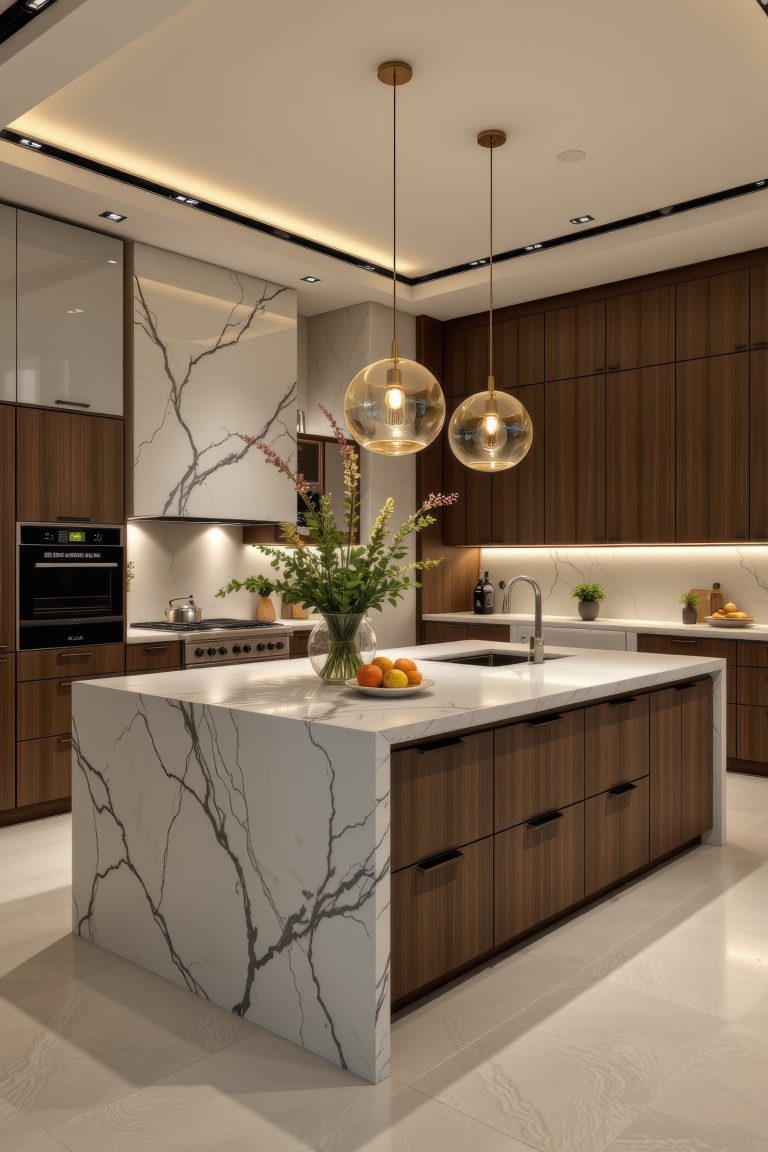
Waterfall edges have become one of the most sought-after features in modern kitchen island bench designs. This elegant approach features countertop material that flows seamlessly down the sides of the island, creating a dramatic visual effect that highlights quality materials and clean lines.
Materials like quartz, marble, and concrete work beautifully for this application
The continuous surface creates a sculptural, high-end appearance
White, light grey, and matte black finishes enhance the minimalist aesthetic
Veined materials add visual interest while maintaining the clean design
Beyond aesthetics, waterfall edges offer practical benefits too—they protect cabinetry and provide a smooth surface that’s easy to clean, which is particularly valuable in busy kitchen areas.
Pro Tip: When planning waterfall edges in modern kitchen island bench designs, pay attention to pattern matching at corners. That perfect alignment makes all the difference in achieving a truly seamless look.
Design 2: Floating Island Bench
Creating a sense of lightness and space, floating island benches seem to defy gravity while maintaining full functionality. These modern kitchen island bench designs use clever structural supports to minimise visual bulk, making them perfect for smaller kitchens or spaces where you want an airy feel.
The floating effect can be achieved through:
Recessed base cabinets that create shadow lines
Cantilevered countertop extensions
Strategic lighting underneath the island
Support structures concealed within a central cabinet block
The space beneath partially floating islands improves foot clearance for barstool seating and creates a more spacious feel throughout the kitchen. This approach works wonderfully in contemporary spaces where clean lines are key to the design.
Design 3: Monochromatic Block Island
Bold and impressive, monochromatic block islands make powerful statements in modern kitchens. These substantial modern kitchen island bench designs use a single colour throughout—from cabinetry to countertops—creating a unified volume that anchors the kitchen space.
Dark tones like charcoal, navy, or forest green create dramatic focal points
All-white designs deliver crisp, clean aesthetics
Matte finishes reduce visual distraction and enhance the monolithic appearance
Consistent materials strengthen the overall impact
The key to successful monochromatic islands is subtle textural variation—using the same colour across different materials creates depth without breaking the colour cohesion. It’s a look that’s both sophisticated and eye-catching.
Pro Tip: With monochromatic modern kitchen island bench designs, consider minimal hardware or push-to-open mechanisms to maintain those clean, uninterrupted lines.
Design 4: Hidden Storage Minimalist Island
Minimalism doesn’t mean sacrificing functionality—it’s about concealing it thoughtfully. These sleek modern kitchen island bench designs maintain clean external lines while housing extensive storage solutions inside.
Key features include:
Handle-free cabinet fronts with push-latch mechanisms
Continuous panels that conceal individual drawers
Clever internal organisers that maximise space efficiency
What makes these islands particularly successful is how they balance visual simplicity with practical kitchen needs. For busy households, this combination of aesthetics and utility proves especially valuable.
Design 5: Thin-Profile Cantilevered Island
For spaces where visual lightness is important, thin-profile cantilevered islands offer an elegant solution. These modern kitchen island bench designs feature ultra-slim countertops (often just 12-20mm thick) that extend beyond their supporting structure, creating a sophisticated floating appearance.
Material selection is crucial for these designs:
Engineered quartz and porcelain provide strength at minimal thickness
Steel reinforcement helps support extended cantilevers
Edge detailing should emphasise the thinness of the material
The cabinet base requires careful engineering to support the overhang
The result is an island that appears almost weightless while providing all the functionality you need—a perfect example of how modern kitchen island bench designs can move beyond traditional kitchen conventions.
2. Multi-Functional Modern Kitchen Island Bench Designs
Design 6: Island with Integrated Dining Table
Bridging kitchen and dining functions, islands with integrated tables are among the most practical modern kitchen island bench designs for today’s lifestyles. These versatile pieces acknowledge how social our kitchens have become while making efficient use of available space.
Integration can take several forms:
Extended countertops at standard table height (30″)
Connected but distinct surfaces at different heights
Pull-out or flip-up table sections for flexibility
Material transitions that visually separate the prep and dining zones
The key to success with these designs is clearly defining the different functional areas while maintaining overall design cohesion. For instance, a stone prep surface might transition to wood for the dining area, signalling different uses while preserving design harmony.
Pro Tip: When planning dining features in modern kitchen island bench designs, allow at least 24″ of knee space depth and approximately 24-30″ width per person for comfortable seating.
Design 7: Workstation Island with Prep Sinks
For serious cooking enthusiasts, workstation islands bring professional-grade functionality to home kitchens. These modern kitchen island bench designs incorporate specialised features centred around a well-positioned prep sink with dedicated zones for different kitchen tasks.
Essential elements include:
Secondary sink with accessories like cutting boards and colanders
Designated areas for chopping, cleaning, and assembly
Convenient knife storage near prep areas
Easily accessible waste disposal
The arrangement should follow natural workflow patterns, with waste disposal near cleaning areas and prep surfaces adjacent to cooking zones. This thoughtful organisation makes cooking more efficient and enjoyable in busy kitchens.
Design 8: Cooking-Focused Island with Integrated Cooktop
Moving your cooking surface to the island creates a more social cooking experience and dramatically changes kitchen workflow. These modern kitchen island bench designs centre around an integrated cooktop, transforming the island into the primary cooking zone.
Key considerations for cooking islands include:
Proper ventilation through overhead or downdraft systems
Heat-resistant countertop materials around the cooking surface
Convenient access to cooking utensils and ingredients
Safe clearance zones around hot cooking areas
When designed thoughtfully, cooking islands allow the chef to face guests while preparing meals rather than turning their back to the room. This social-facing orientation makes cooking more interactive and enjoyable, especially when entertaining.
Pro Tip: For these modern kitchen island bench designs, consider a slightly deeper countertop (36-42″ vs. standard 24″) to create safe buffer zones around the cooking surface.
Design 9: Breakfast Bar Island with Appliance Garage
Morning routines become more efficient with breakfast bar islands that incorporate dedicated zones for morning essentials. These modern kitchen island bench designs feature comfortable seating paired with smart storage for small appliances and breakfast items.
Effective breakfast bar islands include:
Comfortable counter-height or bar-height seating
Appliance garages with roll-up doors for coffee makers and toasters
Dedicated drawers for breakfast essentials like utensils and napkins
Easily accessible outlets for powering appliances
The appliance garage component is particularly valuable as it allows quick access to frequently used items without permanently sacrificing counter space. When breakfast is finished, simply close the garage door for a clean, uncluttered look.
Design 10: Multi-Level Work and Entertainment Island
Adding height variation to your island creates visual interest while clearly defining different functional zones. These dynamic modern kitchen island bench designs feature two or more distinct levels that serve specific purposes.
Common configurations include:
Standard 36″ counter height for food prep areas
Raised 42″ bar height for casual dining and guest seating
Lowered 30″ table height sections for comfortable dining
Small elevated platforms to separate sink areas from food prep zones
The level changes not only differentiate functional areas but also add architectural interest to the kitchen. They can also provide practical benefits like splash protection between wet and dry zones.
3. Material-Forward Modern Kitchen Island Bench Designs
Design 11: Mixed Material Island (Wood and Stone)
Combining contrasting materials creates islands with depth, character, and visual warmth. These modern kitchen island bench designs typically pair the practicality of stone work surfaces with the warmth and tactile quality of wood elements.
Successful material combinations include:
Marble or quartz tops with wood waterfall edges or bases
Wooden butcher block sections integrated into stone countertops
Stone surrounds with wooden breakfast bar extensions
Dark stone with light wood or vice versa for dramatic contrast
The material transition points become design features in themselves, highlighting the intentional nature of the combination. These transitions often align with functional changes—wood for seating areas, stone for prep zones.
Pro Tip: When combining materials in modern kitchen island bench designs, keep other kitchen elements simpler to let the island be the focal point of material interest.
Design 12: Concrete Statement Island
Industrial chic meets modern sophistication with concrete islands. These modern kitchen island bench designs leverage concrete’s versatility and unique aesthetic to create distinctive, personalised spaces.
The appeal of concrete islands comes from:
Ability to be cast in any shape or size for custom configurations
Options for integrated features like drainboards or trivets
A variety of finishes, from polished to matte to textured
Unique patina that develops character over time
Modern concrete mixes have overcome many of the material’s traditional limitations, offering improved stain resistance and reduced porosity. The result is a surface that combines industrial character with practical functionality.
Design 13: Marble Luxury Island
Nothing says luxury quite like marble, and as the centrepiece of modern kitchen island bench designs, it makes a powerful statement. With its natural veining and luminous quality, marble creates islands of unparalleled elegance.
Key considerations for marble islands include:
Selecting the right variety—from subtle Carrara to dramatic Calacatta
Book-matching veining for high-impact visual continuity
Edge profile options that highlight the stone’s thickness
Proper sealing to protect against stains and etching
While marble requires more maintenance than some alternatives, many homeowners find its timeless beauty worth the extra care. For those concerned about maintenance, marble-look quartz and porcelain offer similar aesthetics with greater durability.
Design 14: Metal-Accented Island
Incorporating metal elements adds sophistication and visual interest to modern kitchen island bench designs. Whether it’s a full metal base or thoughtful accents, metallic elements bring a refined, current aesthetic to the kitchen.
Popular metal applications include:
Brass or copper banding around the edges or bases
Stainless steel or blackened steel structural supports
Metal mesh or perforated panel inserts
Metallic tile facings on island sides
The reflective quality of metals adds dimension to the kitchen space, catching and playing with light in ways that other materials don’t. This luminosity creates visual movement that enlivens the entire kitchen.
Pro Tip: With metal elements in modern kitchen island bench designs, consider how the finish will evolve over time. While some metals develop a patina, others maintain their original appearance with proper care.
Design 15: Glass and Illuminated Islands
Creating drama through light and transparency, glass elements transform modern kitchen island bench designs into stunning focal points. These islands incorporate illuminated components and translucent materials for eye-catching effects.
Innovative approaches include:
Backlit onyx or translucent stone panels
LED-illuminated glass shelving or dividers
Frosted glass cabinet fronts with internal lighting
Light wells within the island structure
These illuminated features can be purely decorative or surprisingly functional—lighting up work areas, creating ambient mood lighting, or making cabinet contents more visible. The effect is particularly striking in evening hours when other lighting is dimmed.
4. Space-Optimising Modern Kitchen Island Bench Designs
Design 16: Mobile Kitchen Island Bench
Flexibility is the hallmark of mobile islands, which adapt to changing needs through portability. These modern kitchen island bench designs feature quality casters that allow the island to be repositioned as needed.
Key features of effective mobile islands include:
Heavy-duty locking casters that prevent unwanted movement
Lightweight yet sturdy construction materials
Multi-purpose work surfaces that are suited to various tasks
Compact footprints that navigate through doorways and around furniture
For homes where space is at a premium or needs change frequently, these adaptable islands provide valuable workspace without permanent commitment to a single layout.
Design 17: Expandable/Collapsible Island
Adaptability reaches new heights with expandable islands that transform based on your needs. These innovative modern kitchen island bench designs feature extendable sections that can be deployed when needed and tucked away when not in use.
Expansion mechanisms include:
Pull-out work surfaces that extend from the main structure
Fold-down tabletops that provide additional dining space
Nesting components that slide out for more workspace
Modular sections that can be reconfigured as needed
The genius of these designs lies in their ability to serve multiple purposes throughout the day—compact during regular use, expanded for entertaining or special projects. This versatility makes them ideal for smaller homes where space must work harder.
Pro Tip: When considering expandable modern kitchen island bench designs, pay special attention to the quality of the extension mechanisms—they should operate smoothly and lock securely in both positions.
Design 18: Corner-Fitting Island Designs
Making the most of challenging kitchen layouts, corner islands turn awkward spaces into functional assets. These specialised modern kitchen island bench designs are shaped to fit into L-configured kitchens, maximising previously underutilised corner areas.
Effective corner islands feature:
Angled or curved designs that follow architectural lines
Traffic flow patterns that work with the natural movement through the space
Strategic storage that utilises the deeper corner sections
Work surfaces positioned for optimal accessibility
By conforming to the kitchen’s architecture rather than fighting against it, these islands create more usable space while maintaining good traffic flow—a win-win for functionality and design.
Design 19: Narrow Galley Kitchen Islands
Long and slim, these modern kitchen island bench designs are tailored specifically for galley and corridor kitchens where width is limited but length is available. They provide valuable workspace without compromising necessary walkways.
Design considerations include:
Maintaining a minimum 36″ clearance on all sides for safe passage
Emphasising length rather than width (typically 18-24″ wide)
Incorporating slim storage solutions like bottle pulls and narrow drawers
Linear design elements that enhance the sense of flow
These islands often become the organising spine of the kitchen, with work zones arranged along their length in a logical sequence that supports efficient cooking workflows.
Design 20: Multi-Function Peninsula Alternative
Blurring the line between island and peninsula, these hybrid modern kitchen island bench designs connect to the kitchen perimeter at one end while maintaining the accessible character of an island. They’re ideal for kitchens where a full island won’t fit, but additional workspace is needed.
Key benefits include:
Reduced clearance requirements (only three sides need access)
Added stability through the wall connection
Potential for additional upper storage or display at the connected end
Efficient use of space in smaller kitchens
This approach provides many of the advantages of both peninsulas (stability, storage potential) and islands (accessibility, social orientation) in a single design solution.
5. Innovative Modern Kitchen Island Bench Designs
Design 21: Smart Technology Integrated Island
Embracing the digital age, tech-integrated islands incorporate electronic innovations directly into the structure. These forward-thinking modern kitchen island bench designs feature technologies that enhance convenience and functionality.
Popular tech integrations include:
Built-in wireless charging stations for devices
Touch-control panels for lighting and appliance operation
Built-in speakers and entertainment systems
Smart displays for recipes and household management
These technological elements are typically integrated discreetly, maintaining the island’s clean aesthetic while adding significant functional value. The result is a space that feels contemporary yet remains visually uncluttered.
Pro Tip: When planning tech-integrated modern kitchen island bench designs, ensure adequate power sources and consider future-proofing with conduits that allow updating as technology evolves.
Design 22: Sustainable Material Island
Eco-conscious design takes centre stage with islands constructed from environmentally responsible materials. These modern kitchen island bench designs prioritise sustainability without sacrificing style or functionality.
Sustainable approaches include:
Reclaimed wood for bases or countertops
Recycled glass or paper composite surfaces
Bamboo or other rapidly renewable materials
Zero-VOC finishes and adhesives
Beyond material selection, these islands often incorporate energy-efficient features like LED lighting and water-saving fixtures. The result is a beautiful focal point with reduced environmental impact, increasingly important to many homeowners.
Design 23: Artistic Statement Island
For those seeking truly unique spaces, artistic statement islands transform kitchen workspaces into functional sculptures. These bold modern kitchen island bench designs incorporate creative elements that elevate the island from a functional object to an art piece.
Artistic approaches include:
Sculptural bases with organic or geometric forms
Custom-carved decorative elements
Artist-designed tile work or mosaics
Unusual material combinations with strong visual impact
While maintaining essential functionality, these islands prioritise aesthetic expression, becoming conversation pieces that define the kitchen’s character. They work particularly well in homes where the kitchen opens to living areas, serving as a bridge between utilitarian and social spaces.
Design 24: Indoor-Outdoor Transitional Island
Blurring the boundary between interior and exterior spaces, transitional islands extend the kitchen’s functionality into outdoor living areas. These specialised modern kitchen island bench designs are positioned at the threshold between indoor and outdoor spaces, often incorporating pass-through elements.
Key features include:
Weather-resistant materials on the exterior-facing side
Pass-through windows or counters for serving outdoor areas
Dual-sided storage accessible from both environments
Continuous countertop materials that visually connect spaces
For homes in temperate climates or with significant outdoor living space, these islands create a seamless flow between cooking and entertaining zones, enhancing the overall living experience.
Design 25: Family-Focused Activity Island
Recognising the kitchen’s role as a family hub, these modern kitchen island bench designs incorporate features that support various family activities beyond cooking. They’re designed to accommodate homework, crafts, games, and other household functions.
Family-friendly features include:
Height-adjustable sections for users of different ages
Dedicated charging stations for devices
Easy-clean surfaces that withstand art projects and homework
Storage for school supplies and family activity materials
These thoughtfully designed islands acknowledge that in many homes, the kitchen island serves as command central for family life, not just cooking. By intentionally designing for these multiple uses, they better serve the real-life needs of busy households.
Whether you’re drawn to the sleek lines of waterfall edges, the practicality of integrated appliances, or the sustainability of eco-friendly materials, there’s a perfect island design to complement your home and lifestyle. By carefully considering how you use your kitchen and what matters most to you, you can select or create a modern kitchen island bench design that will serve as the centrepiece of your home for years to come.
The kitchen truly is the heart of the home, a space where culinary creativity flourishes and families gather. And just like the recipes we create within them, kitchen design is constantly evolving.
So, what’s cooking in the world of interior design? This post will explore the hottest kitchen trends in 2025, offering a glimpse into the styles, materials, and technologies designers predict will dominate our kitchens in the coming years. Get ready to be inspired!
Best Kitchen Trends 2025
1. Warm Minimalism Takes Center Stage
Minimalism has been a reigning design trend for years, but kitchen trends 2025 are showing a shift towards a warmer, more inviting interpretation of this popular style. Say goodbye to stark white spaces and hello to warm minimalism. This emerging aesthetic embraces natural materials, creating a sense of organic elegance and cosy sophistication. Think light oak cabinets, honed marble countertops, and textured linen accents. The color palettes favored by kitchen trends 2025 in this style lean towards warm neutrals, earthy tones like terracotta and clay, and muted greens, creating a calming and inviting atmosphere.
While still emphasising clean lines and decluttering, warm minimalism, a key element of kitchen trends 2025, prioritises comfort and livability. It’s about achieving a sense of balance – a space that feels both open and airy, yet grounded and inviting. Designers are predicting that this softer approach to minimalism will be a defining feature of kitchen trends 2025, offering a welcome respite from the sometimes sterile feel of traditional minimalist design.
2. Smart Kitchens Get Smarter
Technology continues to transform our lives, and the kitchen is no exception. Kitchen trends 2025 are embracing smart technology in exciting new ways, creating spaces that are not only stylish but also incredibly functional and efficient. Forget standalone gadgets; kitchen trends 2025 are all about seamless integration. Imagine smart refrigerators that track your grocery inventory and suggest recipes, voice-activated faucets that dispense precise amounts of water, automated lighting that adjusts to the time of day, and integrated sound systems that fill the space with your favorite music.
These advancements aren’t just about futuristic novelty; they genuinely enhance the kitchen experience. Smart appliances streamline cooking processes, minimise waste, and offer unprecedented levels of personalisation. From controlling your oven remotely to brewing your coffee automatically, kitchen trends 2025 are putting you in complete command of your culinary domain. Designers are recognising the growing demand for these smart features, making them a central component of their kitchen trends 2025 predictions.
3. Sustainability Shines
As awareness of environmental issues grows, sustainability is no longer a niche concept but a core value. Kitchen trends 2025 are reflecting this shift, with eco-conscious design taking center stage. This means prioritising materials and practices that minimise environmental impact without compromising on style or functionality. Expect to see a rise in the use of recycled materials, such as countertops made from recycled glass or paper composite, and cabinets crafted from sustainable bamboo. Energy-efficient appliances are also key players in kitchen trends 2025, helping homeowners reduce their carbon footprint and save on energy bills.
Beyond materials, kitchen trends 2025 are embracing water-saving fixtures, like low-flow faucets and dishwashers, and composting systems that reduce food waste. These choices not only benefit the planet but also contribute to a healthier and more efficient home environment. Designers are increasingly incorporating these sustainable practices into their kitchen trend visions, demonstrating that stylish design and environmental responsibility can go hand in hand.
4. Bold Colors and Patterns Make a Statement
While neutral palettes have dominated kitchen design for some time, kitchen trends 2025 are ushering in an era of bolder color choices and eye-catching patterns. This trend is all about injecting personality and visual interest into the heart of the home. Think two-toned cabinets, where contrasting colors create a dynamic and modern look. Patterned backsplashes, featuring geometric designs, vibrant mosaics, or textured tiles, are another way to add a touch of drama and artistry. Even a single accent wall in a rich jewel tone or a vibrant mural can transform the entire space.
These bold elements allow homeowners to express their individual style and create a kitchen that truly reflects their personality. Whether it’s a playful pop of color or a sophisticated pattern, kitchen trends 2025 are encouraging us to embrace a more expressive approach to design. Designers are incorporating these vibrant touches into their kitchen trends 2025 forecasts, demonstrating that kitchens can be both functional and fabulous.
5. Multifunctional Spaces Reign Supreme
The kitchen is no longer just a place to prepare meals; it’s evolving into a true hub of the home. Kitchen trends 2025 are embracing this shift by prioritising multifunctional spaces that cater to a variety of needs. As open-plan living continues to gain popularity, kitchens are seamlessly integrating with other areas of the home, creating flexible spaces that can adapt to different activities throughout the day. This might involve incorporating a small home office area within the kitchen layout, complete with a desk and comfortable seating, or creating a cosy seating nook for casual dining and socialising.
Dedicated areas for hobbies, such as baking or crafting, are also becoming increasingly common in kitchen trends 2025. Flexible furniture and clever storage solutions allow homeowners to maximise space and functionality, creating a kitchen that truly serves as the heart of the home. Designers are recognising the evolving role of the kitchen in modern life, and so kitchen trends 2025 predictions reflect this shift towards more versatile and adaptable spaces.
6. Statement Lighting Takes Center Stage
Lighting is a crucial element of any design scheme, and kitchen trends 2025 are placing a strong emphasis on statement lighting. Gone are the days of basic overhead fixtures. Now, it’s all about incorporating eye-catching pendants, sculptural chandeliers, and even integrated LED strip lighting to create ambiance and highlight key design features. Oversized pendants above kitchen islands are particularly popular, adding a touch of drama and sophistication.
Kitchen trends 2025 are also seeing a rise in the use of layered lighting, combining ambient, task, and accent lighting to create a warm and inviting atmosphere. This allows homeowners to adjust the lighting to suit different moods and activities, from bright task lighting for meal prep to soft ambient lighting for evening gatherings.
7. Hidden Appliances for a Seamless Look
For those who crave a clean and uncluttered aesthetic, kitchen trends 2025 offer the perfect solution: hidden appliances. This trend involves seamlessly integrating appliances into the cabinetry, creating a sleek and streamlined look. Refrigerators disguised as pantry doors, dishwashers concealed behind matching panels, and microwaves tucked away in drawers are all part of this minimalist movement.
Hidden appliances not only contribute to a more visually appealing kitchen but also enhance functionality by maximising counter space and creating a more cohesive design.
8. Bringing the Outdoors In with Biophilic Design
Biophilic design, which focuses on incorporating natural elements into interior spaces, is a growing trend across all areas of design, and kitchens are no exception. Kitchen trends 2025 are embracing this concept by incorporating natural materials, such as wood, stone, and plants, to create a calming and restorative environment.
Large windows that maximise natural light, living walls filled with greenery, and natural wood accents are all key elements of biophilic design in the kitchen. These elements not only enhance the aesthetic appeal of the space but also contribute to a healthier and more relaxing atmosphere.
9. Vintage & Retro Touches Add Character
While modern design continues to be popular, kitchen trends 2025 are also seeing a resurgence of interest in vintage and retro elements. This doesn’t mean recreating kitchens of the past, but rather incorporating carefully chosen vintage-inspired pieces or antique finds to add character and personality to the space.
A vintage-inspired stove, antique lighting fixtures, or retro bar stools can add a touch of nostalgia and charm to a modern kitchen. These elements can be mixed and matched with contemporary pieces to create a unique and eclectic look that reflects the homeowner’s individual style. This trend is all about celebrating the past while embracing the present, creating a kitchen that is both stylish and timeless.
From warm minimalism and smart technology to sustainable practices and bold design choices, kitchen trends 2025 offer a diverse range of inspiring ideas for creating a space that is both beautiful and functional. Multifunctional layouts further enhance the kitchen’s role as the heart of the home, catering to the evolving needs of modern families. By embracing these kitchen trends 2025, you can create a kitchen that not only reflects your personal style but also enhances your everyday life.
This post is all about Kitchen organisation ideas.
Is your kitchen more chaos than cooking? We get it! The heart of the home often becomes a battleground of overflowing drawers, mismatched containers, and countertops buried under clutter. It’s frustrating and time-consuming, and frankly, cooking and meal prep can feel more like a chore than a joy. Dreaming of a kitchen where everything has its place, where you can easily find that spice jar or the right-sized lid without a scavenger hunt?
By the time you’re done reading this, you’ll have a toolbox of ideas and inspiration, ready to transform your kitchen into a well-organised space that will save you time, reduce frustration, and, ultimately, make your life a little bit easier. Ready to reclaim your kitchen? Let’s dive in!
Smart Kitchen Organisation Ideas
Ready to reclaim your kitchen? Let’s dive into 15 kitchen organisation ideas you can implement today to create a more functional and enjoyable space.
Drawer Dividers for Utensil Harmony
We’ve all been there – the utensil drawer that’s a chaotic jumble of spoons, spatulas, and that one whisk you can never seem to find. The simple solution? Drawer dividers! These handy tools are absolute game-changers when it comes to keeping things separate and easy to find. Not only does this help you locate what you need quickly and reduce clutter, but it also prevents your utensils from scratching and clanging against each other. Plus, when each item has a designated space, you’ll save time not having to dig around in messy drawers, keeping the kitchen cleaner and your stress levels lower! Think of it as giving each utensil its own tiny, perfectly-sized home.
For versatility and style, look for expandable dividers, preferably made from natural materials like bamboo, that can easily adjust to fit your drawers. The adjustability ensures a good fit, and bamboo will add an element of elegance, or if you’d rather a modern option, consider clear acrylic dividers to give it a clean feel.
Vertical Storage: Tiered Shelves and Risers
When it comes to kitchens, you might often find yourself limited on space, but using vertical space wisely is essential for maximising space and getting items up and out of the way. Tiered shelves and risers are your secret weapon for cabinets and countertops! They work by elevating items, allowing you to easily see and reach those things that get pushed to the back. These aren’t just for your pantry; try using them to organise spice jars on your countertop, or to make stacks of plates or cups more visible and easy to reach in your cabinets. This method makes use of that often-overlooked height, prevents items from becoming lost in the shuffle, and makes everything so much easier to grab. No more stacking and toppling – everything has its place.
Look for a tiered shelf or riser that will maximise the vertical space in your cabinets, with shelves spaced in ways that can store more items in them. Or choose ones made with durable materials that can help showcase some of your most-used kitchen tools and essentials on your counter.
Pull-Out Shelves in Cabinets
Reaching the items at the back of deep cabinets can often feel like a daunting task. But with pull-out shelves, those awkward spots suddenly become functional and easy to access. These shelves slide out smoothly, bringing everything right to you, saving you from the hassle of rummaging blindly. They’re particularly great for storing heavier pots, pans, or bulky items, preventing them from getting lost in the far corners.
By maximising storage space from the front to the back, it can help avoid double-storing the same things. Pull-out shelves will transform those frustrating areas into a more efficient and accessible storage solution. They are easy to install on any cabinet, and make sure your storage is not in vain, and nothing will ever be lost in the back of those hard-to-reach cabinets. While you don’t buy pull-out cabinets off the shelf, consider implementing a solution to easily slide them out to reach even the back of your kitchen cabinets.
Cabinet Door Organisers
Don’t let that valuable real estate inside your cabinet doors go to waste! Cabinet door organisers are incredibly versatile, providing a place to store a variety of kitchen essentials you’d otherwise leave on the counter or stuffed into a drawer. They’re especially great for awkward, thin items like cutting boards, foil, wraps, or even cleaning supplies. By mounting organisers to your cabinet doors, you’re utilising unused space, keeping your items accessible but hidden away from the counter, which is helpful when keeping the kitchen more neat and tidy. Consider it as doubling your storage without taking up any more space!
For an all-around, versatile solution, we suggest an over-the-door organiser with multiple tiers and compartments. Look for a sturdy design with secure hooks to ensure it can hold its weight, as well as varied compartments to fit foil, wraps, and even cleaning supplies to ensure they stay in place while closed.
Utilise Clear Containers for Pantries and Fridges
Transparency is key when it comes to effective kitchen organisation. Using clear containers for both your pantry and refrigerator allows you to instantly see what you have, preventing you from overbuying and letting food go to waste. Ditch the opaque packaging and swap to jars for your dry goods to maximise freshness and the visual of seeing the product, or consider organising produce using see-through bins for the refrigerator to better see what’s in there and group them by type. These clear containers not only help you see what needs to be used, but they also create a more uniform and visually appealing space. They bring a sense of calm to chaos and encourage you to eat what you have, ultimately reducing waste and saving you money. It’s about taking the guesswork out of the storage and having a visually organised look at your pantry.
For dry goods, we recommend using classic, well-sealing glass jars; they are beautiful and functional for storage, and if you choose a matching set of see-through bins in various shapes and sizes for your refrigerator and pantry, this will help maintain a clean and sophisticated look.
Label Everything Clearly
Even with the best intentions for clear containers and visible storage, it’s easy to lose track of what’s what in your kitchen, so labelling is absolutely vital for lasting organisation. Clearly labelling all of your containers, drawers, and bins ensures that the system doesn’t break down over time, and especially helps any additional help in the home to also participate in keeping the space tidy.
Whether it’s a simple waterproof label for identifying the spices or a handwritten label on storage jars with the date the item was purchased, having your storage organised is half the battle, but making sure the labelling is consistent can be the key to keeping a well-organised kitchen.
Utilise Wall Space: Hooks & Hanging Racks
In many kitchens, wall space is often an underutilised resource. Why let your walls be blank when they can be the perfect place to keep utensils, pots, or even cutting boards within easy reach? Hooks and hanging racks can free up drawer and countertop space, providing you with convenient storage that’s not only functional but also adds character to your kitchen.
From sleek metallic racks for hanging your pots and pans to stylish hooks for your most-used utensils, utilising wall space allows you to see what you have and prevents items from being buried in drawers and cabinets. This also adds an element of charm and display to the functional kitchen space, so that your kitchen essentials are not only convenient but beautiful.
Rolling Cart Kitchen Storage
Need a little extra storage, but don’t want to commit to a permanent addition? Consider a rolling cart! This versatile piece is your flexible friend in the kitchen, providing extra storage wherever you need it, whenever you need it. Whether you need a temporary kitchen island for prep space, extra storage during gatherings, or just a handy place to keep your frequently-used items, a rolling cart provides an all-around movable and convenient solution. They’re perfect for small kitchens where space is limited, or can serve as a secondary prep area in larger kitchens. They’re also incredibly easy to customise with baskets and containers. It’s a convenient and effective option for a kitchen in a small space, or can serve as the perfect addition in a larger one, to provide even more storage to meet all your needs.
Look for a well-built cart that rolls easily and is suited to the aesthetic of your kitchen with sturdy shelves to handle your varying kitchen tools. For a sleek, modern aesthetic, metal rolling carts work wonderfully. Choose one based on its durability and what storage needs you may have for the kitchen space.
The Power of a Lazy Susan
Corner cabinets – the bane of many kitchen organisers! The items you put in the corners end up being forgotten, since they are harder to see and difficult to reach, but fear no more! The simple solution to corner storage is to bring in the Lazy Susan. This rotating turntable makes reaching anything that might be tucked into the back of your cabinet suddenly effortless. You can also place them on your countertops, and they also work great in the fridge for storing sauces or spices that often get forgotten. They bring everything to the front so you’re no longer blindly searching or losing items in the back of hard-to-reach cabinets or counter space. This will keep your items from being lost and forgotten about and ensure that you are getting the full use of your space.
Opt for a tiered or multi-level lazy susan, or try a variety of them for different uses. Bamboo is a stylish and sustainable option, while plastic is a great, durable and easy-to-clean pick. Consider your colour aesthetic and overall style when choosing a Lazy Susan to use, to be sure it matches with your existing kitchen pieces. You can find a great range at a store like the Container Store or Bed Bath & Beyond. Consider choosing a rotating tray based on where you might plan to store and use this kitchen storage.
Pot and Pan Lid Organiser
Let’s face it, pot and pan lids are the awkward items in our kitchens. They’re often stored haphazardly, creating a noisy, clanging mess in drawers or cabinets. They seem to pile up and make a dishevelled scene if left untamed. A dedicated pot and pan lid organiser can bring order and peace into this chaotic storage situation. These organisers keep your lids separated and neatly arranged, preventing scratches and making it easy to find the right one when you need it.
By having a specific place for these notoriously clumsy kitchen items, you’re optimising your space and making meal prep a much smoother and organised experience. This not only avoids damage but keeps those items from flying out every time the drawer or cabinet is opened. Look for adjustable organisers that can accommodate different lid sizes and thicknesses, or try using vertical racks to stand the lids up in the cabinet. Consider the spacing between the vertical bars to make sure it will properly hold and keep them in place without falling out
The Magic of the Dish Drying Rack
Leaving dishes to dry on the counter can be inconvenient and create a cluttered mess, and no one wants to deal with a wet countertop from soggy drying dishes. The simple solution? A stylish and efficient dish drying rack! This will provide an immediate and convenient solution to dry your dishes properly and efficiently, instead of having a chaotic array of wet dishes left on the counter to dry. This simple piece not only keeps the counter space free and tidy, but also makes the post-meal cleanup so much easier. Consider how often dishes are washed and if your drying solution is actually functional for your needs and your space, because a simple solution can help avoid a lot of clutter in the kitchen.
Consider what kind of drying rack fits into your style and space. If you’re limited on counter space, there are a variety of slim and efficient designs, such as foldable or roll-up drying racks that can be stowed away when not in use. For those with a more permanent need, a sleek dish rack with a built-in tray can create a contemporary style while efficiently keeping your dishes properly organised.
Under the Sink Organisation
The space under the sink often ends up being a chaotic catch-all, a messy area that’s often neglected, but this area is one of the most crucial parts to get organised. From cleaning supplies, dish soap, and sometimes extra sponges and paper towels get haphazardly shoved under the sink, but it doesn’t have to be. Consider lining the bottom of your under-the-sink cabinet with a waterproof liner or tray to protect the cabinet from spills, and use caddies or organisers to neatly group similar items together, such as cleaning sprays, cloths, and dish soap. Adding a tiered organiser can maximise space by using the vertical height under the sink to bring smaller items forward so they are not lost in the back.
By adding small adjustments and creating organisation under your kitchen sink, you create a smooth, streamlined process of accessing your kitchen supplies to maintain a tidier kitchen. Look for sturdy, waterproof organisers with handles that make it easy to take supplies out of the cabinet, or consider a tiered organiser to make the most out of your vertical space. You can often find great caddy sets or drawers from the Container Store.
First in, First Out Pantry Rotation
How often do you reach into the back of your pantry and find something expired? It’s a common issue when you just pile new items in front of the old ones, but the “First In, First Out” method (FIFO) can help to prevent that! This involves making a habit of using the oldest items first before reaching for the new ones. When you come back from the grocery store, always move your older products forward and put the newer purchases behind them. This can help to reduce food waste and save money by making sure food items don’t get lost and forgotten about in the back of the pantry. Implementing FIFO doesn’t have to be complicated; it’s just a matter of shifting your habits and adding new food purchases to the back, so that older items get used first and avoid expiry dates.
Create Zones
Thinking of your kitchen as a series of functional zones can be a game-changer for efficiency. Instead of scattered chaos, think of designating different parts of your kitchen to specific tasks: a baking zone, a coffee station, a prep zone, etc. Having these clearly defined zones can streamline how you navigate and use your kitchen for each specific need. Keep all your baking supplies in one area – measuring cups, flour, sugar – so they’re ready for any baking adventure you decide to embark on. Designating a specific spot for a particular need can help to prevent things from being misplaced, make meal prep easier, and keep everything organised since it always returns to the same spot. You’ll notice a huge difference when each zone is established and maintained.
Regularly Declutter
Finally, even the most organised kitchens need regular decluttering. It’s easy to accumulate items that you simply don’t use or need and to slowly forget about old items that start to take up valuable space. Take a few minutes regularly to purge out items that no longer have a purpose in your kitchen, whether that is a random utensil you never use, a mismatched container you forgot you owned, or old food that expired.
By doing this routinely, you prevent the build-up of clutter that can inevitably lead to a kitchen that’s no longer organised. Incorporate decluttering into a simple routine by using the FIFO system, or spend 10 minutes each week to quickly see if there’s anything you can let go of from the pantry, fridge, or your cabinets. A consistently decluttered space is key to a consistently organised kitchen and home.
By implementing these 15 kitchen organisation ideas, you can transform your space into a more functional and enjoyable environment. Remember, a well-organised kitchen is not just about aesthetics, but about making daily life easier and more efficient.