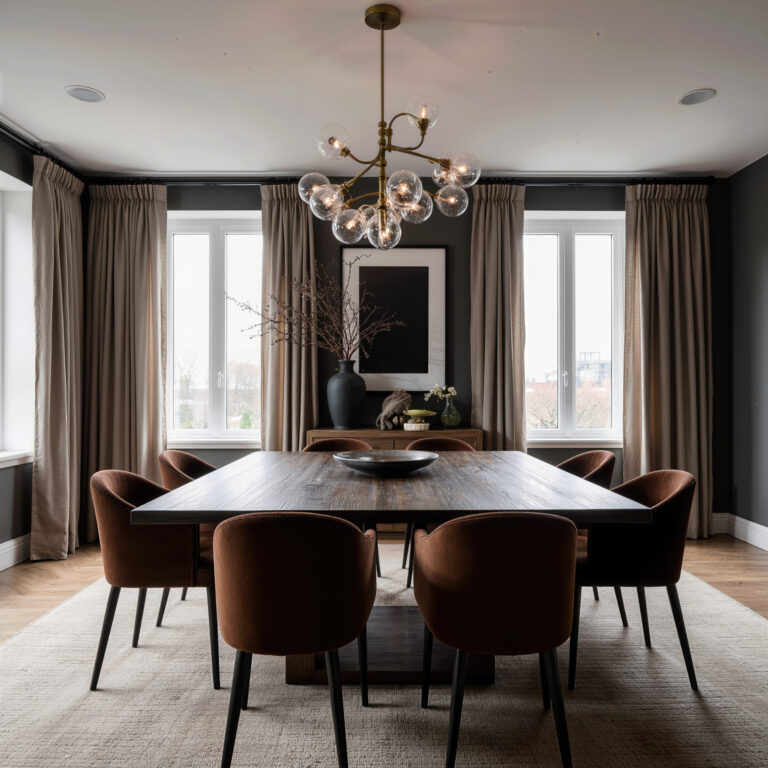
There’s something undeniably captivating about a dark dining room. The depth, the mood, the quiet confidence, it all creates a sense of intimacy that lighter spaces sometimes struggle to achieve. Designing with darker tones isn’t about making a bold statement for the sake of it; it’s about building an atmosphere that feels grounded and inviting.
That said, working with dark palettes can be tricky. Without balance, a space can quickly shift from warm and cocoon-like to heavy and confined. The good news? With the right approach, you can design a dining room that feels both dramatic and alive. In this post, we’ll explore practical dark dining room ideas that help you achieve that balance for a space that feels cosy, not cramped, and perfect for unrushed dinners or quiet evenings in.
Read this post for the best Dark Dining Room Ideas.
Understanding the Appeal of a Dark Dining Room
If you’ve ever stepped into a room with deep, moody tones, you know how instantly the mood shifts. Dark interiors draw you in; they feel layered, sophisticated, and deeply personal. In a dining room, those qualities translate into an environment that invites conversation and slows the rhythm of the day.
One of the most common misconceptions about dark spaces is that they make rooms feel small. The truth is, dark dining room ideas often create the perception of depth when handled correctly. Deep hues soften edges, making the boundaries of the room feel less defined, and therefore more expansive. The key is to balance shadow and light.
A thoughtfully designed dark dining room isn’t about creating a perfect showroom; it’s about designing a mood. Think of dark walls as a backdrop for texture, tone, and light to interact. Add contrast with natural materials; wood, brass, or soft fabrics, to bring warmth into the space. This balance is what transforms “dark” from heavy to harmonious.
Transitioning from inspiration to execution, let’s move into selecting the right tones, the foundation of every great dark dining room design.
Choosing the Right Dark Tones
Choosing the right colour palette is where dark dining room ideas really start to take shape. The hues you pick determine not only the overall aesthetic but also how the room feels when you’re standing in it. It’s less about selecting the “darkest” tone and more about understanding the kind of atmosphere you want to create.
Warm vs. Cool Dark Shades
Warm dark shades, like deep olive, espresso brown, or navy with a touch of warmth, tend to make a dining room feel grounded and comforting. They pair beautifully with warm woods, soft lighting, and golden accents. Cool, moody tones, on the other hand, charcoal, graphite, or deep blue-greys, are ideal if you’re aiming for a more modern, dramatic look with clean edges.
Whichever direction you choose, consistency is key. Let one dominant dark colour lead the way, then support it with subtle variations or complementary tones. This creates visual depth instead of a flat, monotone surface.
Creating Balance with Accent Colours
A well-designed dark dining room isn’t about the walls alone; it’s about what surrounds them. Introducing contrast through lighter or reflective accents prevents the space from feeling overly heavy. Think of creamy whites, soft taupes, aged brass, or even a touch of blush or terracotta. These accents catch the light, adding dimension to the darker backdrop.
You can apply this idea through accessories, lighting fixtures, or even the dining chairs themselves. For example, light linen upholstery instantly softens a deep wall colour and gives the room a sense of visual breath. The goal is harmony, where dark and light elements coexist, each enhancing the other.
Texture Over Pattern
An often-overlooked trick for pulling off dark dining room ideas is to rely on texture rather than busy patterns. Dark walls highlight surface details beautifully, so think about velvet, matte paint, natural wood grain, or soft textiles. These tactile finishes reflect light softly and subtly, giving depth and life to the room without visual clutter.
Lighting Strategies to Brighten the Mood
Lighting is the element that makes or breaks any dark interior, and this is especially true for dining spaces. It’s the bridge between dramatic design and day-to-day comfort. The best dark dining room ideas don’t try to fight against the darkness; they work with it, using light to highlight texture, shape, and atmosphere.
A dark wall colour can actually enhance lighting if it’s layered thoughtfully. Instead of one overhead fixture, consider a blend of light sources that guide the room’s mood throughout the day.
Layer Your Lighting
You’ll want to think about lighting in layers: ambient, task, and accent.
Ambient lighting: This is your overall glow. Think pendant lights or a chandelier that sets the tone. Warm bulbs (around 2700K) complement dark tones beautifully, keeping the space soft rather than stark.
Task lighting: Wall sconces or console lamps near serving areas help keep things functional. These smaller pools of light prevent any one area from looking flat.
Accent lighting: A low-intensity lamp or subtle under-shelf LEDs can draw attention to surfaces or textures. And never underestimate candlelight, its flicker feels timeless against rich wall colours.
When these layers overlap gently, the result is a subtle rhythm of light and shadow. It’s what gives a dark dining room that enveloping, intimate character without ever feeling dim or oppressive.
Reflect and Amplify Light
Light reflection is one of the simplest, but most effective, strategies to open up a moody room. Mirrors, metallic finishes, and glass elements bounce light naturally while fitting right into a dark colour palette. You don’t need to overdo it; a single large mirror on one wall, or glass accessories on a sideboard, can shift the atmosphere entirely.
Even glossy or satin finishes on a dark wall can help distribute light softly. The key is balance: too much reflection breaks the cosy mood; too little and the space feels flat.
Make Dimmers Non-Negotiable
A dimmer switch is your best friend in a dark dining room. It allows you to soften or brighten the mood as needed; bright for family meals, low and intimate for evenings. It’s a small upgrade that completely changes how dark tones behave, giving you the flexibility to adjust the atmosphere instantly.
Furniture and Layout Tips for a Spacious Feel
When working with darker palettes, furniture selection and layout are what keep a room feeling balanced. Colour alone can set the tone, but it’s the shapes, materials, and negative space that determine whether your dining room feels inviting or visually heavy. The best dark dining room ideas treat the room like a living, breathing composition, one that leaves space for light and movement.
Keep the Foundation Streamlined
Furniture that feels visually light helps offset the richness of darker tones. Choose dining tables with elegant, clean lines rather than bulky bases. Chairs with slender legs or open backs will feel less intrusive in a smaller or darker space. If your dining room is compact, round or oval tables encourage flow and keep corners from crowding the eye.
When it comes to finishes, mid- to dark-toned wood can blend seamlessly with a moody palette. The key is subtle contrast, enough to separate pieces from the walls without creating a stark divide.
Reflective and Transparent Touches
Incorporating reflective or transparent materials is another way to keep a dark dining room open and dynamic. A glass-top table, glossy sideboard, or acrylic-accented chairs gently bounce light while maintaining cohesion with the darker aesthetic. Think of them as structural highlights, functional but designed to breathe life into the room.
Even metallic finishes on furniture legs, mirror-panel sideboards, or subtle gilding on the frame of artwork can catch just enough light to lift the atmosphere without clashing with deeper hues.
Leave Room to Breathe
Spacing matters just as much as style. Aim for enough distance between furniture to allow easy movement, especially if your dining area connects to another part of the home. Overcrowding dark tones makes a room feel static and small, while deliberate spacing gives it flow and elegance.
A well-placed rug can also define zones within an open-plan setup, framing your dining area without weighing it down. Choose textures that complement the wall tone, woven fibres or subtle patterns that anchor the space without competing for attention.
Textures, Materials, and Finishing Touches
Texture is where a dark dining room really finds its soul. You can have the perfect colour palette and layout, but it’s the materials, the way light hits them, the way they feel, that give the room dimension and warmth. Many of the most successful dark dining room ideas build their depth through contrast, not colour alone.
Layer for Depth
When everything in a dark space is smooth and matte, the result can feel a bit flat. Layering textures brings movement and energy to the room. Pair velvet or linen upholstery with a natural wood table. Add a wool rug or woven runner for softness underfoot. Even a hint of metallic, like a burnished brass or antique bronze detail, can catch light beautifully against matte surfaces.
The goal isn’t to overwhelm the room with variety but to create tactile richness, where every element feels considered and cohesive.
Mix Matte and Gloss Finishes
A thoughtful mix of finishes can make an enormous difference. Use matte walls as a background to highlight reflective surfaces, such as glassware, polished ceramics, or a metallic pendant light. Glossy textures help dark designs come alive by subtly catching and dispersing light, preventing the palette from looking too dense.
Even modest touches, like a lacquered sideboard or high-sheen candle holder, can lift the entire scheme without breaking the moody aesthetic.
Let Artwork and Accessories Tell a Story
Accessories should feel intentional. In dark spaces, every object has more visual presence, so it’s worth curating carefully. A large-scale piece of artwork in muted tones or line drawings can anchor a wall without cluttering it. Table décor should be minimal, perhaps a sculptural bowl, a cluster of candles, or a statement vase.
Avoid filling every surface; a touch of empty space allows each texture and shape to stand out. This restraint keeps the atmosphere relaxed rather than busy.
Accessorising Without Overcrowding
It’s easy to get swept up in decorating once your colours, lighting, and furniture are in place, but restraint is where dark interiors truly come to life. In a darker space, every detail carries more weight. The best dark dining room ideas balance visual impact with breathing room, allowing textures and tones to shine through.
Choose Statement Pieces Thoughtfully
Not every surface needs a centrepiece, and not every wall needs art. Focus on one or two focal points: a striking pendant light, a sculptural vase, or a piece of dramatic artwork. These moments of emphasis anchor the room and give the eye somewhere to rest.
An oversized art piece works beautifully in a dark dining room because it reads as calm and intentional rather than busy. Stick with muted or tonal artwork that complements your palette; vivid colours can sometimes feel jarring against deeper backgrounds.
Edit the Tabletop
The dining table should look lived in, not staged. A few well-chosen objects, candles, ceramics, or a simple runner, can bring a balanced sense of warmth. If you’re using darker tableware, add contrast with lighter linens or textured placemats to break up the depth.
Less is more here. A little negative space allows the room’s natural character, colour, light, and texture to take the lead. This simplicity reinforces the cosy, understated feel that defines truly successful dark dining room designs.
Integrate Natural Elements
Adding natural details is an effortless way to bring warmth into darker environments. A vase of seasonal greenery or dried stems introduces organic contrast to strong colour blocks. The textures of nature: wood, rattan, stone, ground the space and soften the impact of deep hues.
The idea is a subtle connection rather than clutter; each piece should feel like it belongs to the story the room is telling.
Common Mistakes to Avoid
Even the most carefully planned interiors can lose their charm if a few key details are overlooked. Dark spaces are especially sensitive to lighting, balance, and proportion, so avoiding a few common pitfalls can make a big difference. Think of these as gentle guidelines that keep your design intentional rather than overwhelming.
1. Relying on Only One Light Source
A single overhead light is rarely enough. It might illuminate the room, but it flattens everything else, the colours, the textures, even the atmosphere. Successful dark dining room ideas always use layered lighting to create mood and depth. Combine ambient light with accent and task lighting, so the glow feels dynamic, not harsh or uneven.
2. Ignoring Reflective Surfaces
Without reflection, dark tones can become too static. Gloss finishes, mirrors, or subtle metallics help move light around and stop the room from feeling boxed in. The key is moderation; just a few reflective details in the right places can lift the space beautifully.
3. Overdecorating the Space
Dark dining rooms are most beautiful when they’re allowed to breathe. Adding too many accessories, wall decorations, or furniture pieces can make the room feel cramped. Leave intentional blank space on tables, walls, and even floors. This open balance is what turns moody into serene.
4. Forgetting About the Ceiling and Floor
A cohesive dark room doesn’t stop at the walls. Ignoring the ceiling or floor can make a space feel incomplete. Try introducing subtle contrast, a soft rug to anchor the table, or a ceiling in a complementary shade that echoes your colour palette. These surfaces help tie the atmosphere together without adding visual clutter.
Designing a dark dining room is about more than colour; it’s about atmosphere. Deep hues lay the foundation, but it’s the balance of light, texture, and thoughtful placement that brings the space to life. When done right, a dark dining room feels warm, cocooning, and quietly luxurious, never gloomy or confined.
One of the most exciting parts of decorating your home is learning how to choose a wall colour that truly fits your space. The right shade can make a room feel calm, warm, bold, or bright; it sets the tone for everything else in your design.
Choosing paint isn’t just about what looks good on a swatch. It’s about how colour interacts with light, furniture, and the overall mood of your home. With so many options out there, it’s easy to feel unsure where to start, but by following a simple step-by-step approach, you can make smart choices that look and feel right. This guide breaks down the 9 steps that will help you confidently find a wall colour that complements your space and your personal style.
Read Along To Learn How To Choose A Wall Colour.
Step 1 – Get Inspired by Your Space
Before you even think about paint chips or sample pots, start by looking at what’s already in your room. Every element in your space, furniture, flooring, fabrics, and artwork, offers clues to the colours that will naturally work well together.
When figuring out how to choose a wall colour, let your current space be your guide.
A few ways to find colour inspiration:
Look closely at your furniture and décor. What tones stand out in your favourite pieces?
Notice your flooring. Warm timber floors often pair beautifully with earthy neutrals, while cool tiles look great with soft greys and blues.
Study your artwork or textiles. Cushions, rugs, and wall art can inspire accent tones or overall palettes.
Save what catches your eye. Use Pinterest or mood boards to collect images that capture the feeling you want in your room.
Once you’ve gathered some inspiration, notice any patterns; are you drawn to warm, earthy tones or cooler, coastal shades? This gives you a good starting point for exploring specific paint colours later on.
Pro Tip:
Hold paint cards or small colour samples next to key items in your room (like your sofa, flooring, or curtains). Seeing tones side by side helps clarify which direction to take before you even open a tin of paint.
Step 2 – Understand Natural and Artificial Light
Light is one of the biggest influences on how a wall colour looks once it’s on your walls. The same shade can appear completely different in a north-facing room compared to a cosy, low-light space. This is why understanding how light affects colour is a key part of learning how to choose a wall colour that actually works for your home.
Start by observing your space at different times of day. Watch how the light moves and shifts, and notice whether it tends to be warm and golden or cooler and more neutral.
Here’s how to factor light into your choice:
North-facing rooms: Usually receive softer, cooler light. They often suit warmer tones like beige, taupe, or creamy whites that add warmth.
East-facing rooms: Catch the morning sun, which can make colours look brighter early in the day and cooler in the afternoon.
West-facing rooms: Tend to glow in the afternoon with a warmer hue, so soft blues and greys can balance that richness.
South-facing rooms: Get strong, consistent light, so most colours work well, though you may want to avoid pure whites that can feel stark.
Artificial light plays a role too. Bulbs with a yellow tint (warm light) will bring out warm undertones in your paint, while cool LED lighting can make blues or greys appear sharper.
Pro Tip:
Always test your paint samples on at least two walls and look at them during different times of day. What looks perfect in daylight might feel completely different under evening light, so take the time to live with your samples before deciding.
Step 3 – Learn About Undertones
Once you’ve considered light, it’s time to understand what’s really happening underneath each colour. Undertones are the subtle hues within a paint colour that can shift its overall look, and they’re often what makes or breaks your decision when learning how to choose a wall colour.
Even when two paints look “white” or “grey,” they may have very different undertones. One might lean slightly blue, while another has a hint of yellow or pink. The key is noticing these subtle variations and understanding how they interact with your furnishings and light.
A simple guide to undertones:
Warm undertones: Include red, yellow, or orange bases. These create a cosy, welcoming feel.
Cool undertones: Include blue, green, or violet bases. These tend to feel fresh, calm, and airy.
Neutral undertones: Sit somewhere in between. Ideal when you want a balanced backdrop that works with both warm and cool décor.
When comparing paint cards, place them next to a true white sheet of paper to reveal their undertones more easily. This trick helps you see which direction the colour leans without being influenced by surrounding tones.
Pro Tip:
If you’re unsure, test a few shades within the same colour family on your wall. Seeing them side by side will quickly show which feels best with your natural light and existing décor.
Step 4 – Align Colour with Mood and Purpose
Every room in your home has a purpose, and the colour on the walls should support that. When you’re deciding how to choose a wall colour, think beyond just how it looks; consider how you want the space to feel. Colour affects mood more than most people realise. A soothing tone can calm a busy mind, while something more vibrant can uplift your energy.
Here’s a quick guide to matching mood with space:
Bedrooms: Soft, muted tones like warm greys, sage greens, or gentle blues encourage rest and relaxation.
Living areas: Warm neutrals and mid-tone colours make spaces feel inviting and cosy.
Kitchens: Crisp whites, light greys, or pale yellows can create a sense of cleanliness and vibrancy.
Home offices: Greens and blues support focus and balance, both calming yet slightly energising.
Bathrooms: Lighter, airy shades can make small areas feel more open and fresh.
When it comes to how to choose a wall colour, the goal is to match the emotional energy of the room to the function of the space. A colour that’s perfect for your study may not suit the relaxed, restful vibe of a bedroom.
Pro Tip:
If you’re drawn to a bold or dark shade, consider using it on one feature wall rather than the entire room. It gives character and depth without overpowering the space.
Step 5 – Consider the Room’s Style and Architecture
The architectural design of your home plays a big role in how different colours behave. A wall colour that looks stunning in a sleek apartment might feel completely out of place in a heritage-style home. This step in how to choose a wall colour is about letting the structure and style of your home guide your palette.
Consider these points:
Classic or heritage homes: Rich creams, muted greens, and soft blues often complement traditional details like wainscoting or high ceilings.
Modern spaces: Clean neutrals, crisp whites, or dramatic contrasts such as charcoal and pale grey align well with streamlined designs.
Coastal or relaxed interiors: Natural tones like sand, stone, and muted aqua enhance light and openness.
Industrial-style settings: Charcoal greys, muted browns, and warm whites tie in with the textures of concrete and metal.
By aligning your choices with your home’s features, you’ll create a colour story that feels organic and unified rather than forced.
Pro Tip:
Don’t forget fixed features like flooring, cabinetry, and trim. These are often expensive to change, so choose a wall colour that complements them instead of competing.
Step 6 – Test Paint Samples Properly
Even the most carefully chosen paint colour looks different once it’s on your actual walls. Light, texture, and the size of the space all influence perception. This is one of the most important parts of learning how to choose a wall colour that truly fits your space.
How to test your samples effectively:
Paint directly on the wall: Use at least a 60cm patch on different walls, especially where light changes.
Label your samples: Include both colour name and brand so you can easily compare later.
View at different times: Look at the samples in morning light, midday brightness, and evening lamplight.
Live with it: Spend a few days around the samples to see how they feel before committing.
Stepping back and seeing those patches under different conditions gives a realistic idea of how the colour interacts with the rest of your room.
Pro Tip:
Avoid painting over old colours when testing, as they can distort how your new sample reads. Instead, prime a small area first or use large sample sheets to get a true sense of tone.
Step 7 – Balance with the Rest of Your Palette
Once your wall colour samples are looking promising, it’s time to step back and see how they fit within your room’s overall palette. A paint colour never stands alone; it needs to work in harmony with every other tone in the space. Getting this balance right is central to understanding how to choose a wall colour that feels cohesive and intentional.
Think about these key points:
Use the 60-30-10 rule:
60% main colour (usually the walls)
30% secondary colour (like furniture or curtains)
10% accent colour (decor, cushions, artwork)
Check the undertones across materials: Make sure your wall colour’s undertone doesn’t clash with flooring, cabinetry, or metal finishes.
Repeat colours subtly: Pull a shade from artwork, fabric, or a rug into your wall colour to create a sense of flow.
Keep contrast in mind: A bit of difference between your wall colour and trim or ceiling colour adds dimension and polish.
Balancing colours doesn’t mean everything has to match; rather, it’s about creating an easy visual rhythm throughout the room. When learning how to choose a wall colour, trust that small details, like the reflection of a rug’s tone or brass hardware, can subtly affect how a paint colour reads.
Pro Tip:
If you’re unsure about how your colour palette ties together, lay fabrics, materials, and paint swatches side by side on a flat surface. Step back and look at them as a single unit; this simple trick can reveal imbalances before you commit.
Step 8 – Think About Finish and Paint Quality
Finish can completely change how a wall colour looks and performs. Even with the perfect shade, the wrong finish can alter the feel or practicality of your space. When exploring how to choose a wall colour, make sure to also think about sheen, durability, and how each finish behaves under light.
Common paint finishes and where they work best:
Matte / Flat: Hides imperfections beautifully, ideal for bedrooms and living rooms.
Low Sheen / Eggshell: A soft glow that’s easy to maintain, perfect for hallways and family areas.
Satin: Smooth and slightly reflective, great for kitchens or bathrooms due to its washable surface.
Semi-gloss / Gloss: Best for trims, doors, and cabinetry — durable and easy to wipe clean.
Higher-quality paint often has stronger pigments and better coverage, which means fewer coats and a longer-lasting result. If you want a rich, even finish that truly shows off your chosen shade, investing in good paint quality pays off.
Pro Tip:
When testing samples, try them in the finish you plan to use. The sheen level can subtly lighten or darken how you perceive the colour once it’s fully dry.
Step 9 – Trust Your Gut
After all the testing, comparing, and analysing, sometimes the best decision is the one that simply feels right. Decorating is both art and intuition, and the process of learning how to choose a wall colour should always reflect your personal taste and connection to your home.
A few things to keep in mind:
You’re the one living in the space, pick what feels comfortable to you.
Trends come and go, but timeless combinations rooted in what you love always last.
If a colour makes you smile when you walk into the room, that’s usually the one.
Design decisions blend logic with emotion. You’ve considered light, undertones, style, and balance; now give yourself permission to enjoy the choice rather than second-guess it.
Pro Tip:
Paint is one of the simplest things to change in a home, so don’t stress too much. If your first choice doesn’t feel perfect, you can always adjust the tone later.
Bonus Tips – Bringing Your Wall Colour Choice to Life
Once you’ve followed all nine steps and found a colour you love, the next phase is making it work in your home. Choosing paint is one thing, but applying it thoughtfully and styling the room around it can make all the difference. Here are a few expert tips to help bring your chosen shade to life.
1. Start with a Clean Canvas
Before painting, make sure your walls are properly prepped; clean, smooth, and primed if necessary. A well-prepared surface helps your paint go on evenly and makes the true colour shine through.
2. Use Paint in More Creative Ways
You don’t have to limit your colour to walls. Consider:
Painting trim or ceilings in a softer or bolder version of your wall colour for subtle depth.
Using colour zoning to define areas in an open-plan space, like painting half a wall or framing a workspace.
Creating contrast with painted features, such as doors or shelving, to give visual interest.
3. Test Paint in the Largest Format Possible
If small swatches still leave you uncertain, try painting large sample boards instead. You can move them around the room without committing right away. Seeing a bigger sample makes undertones and lighting shifts much easier to notice.
4. Don’t Forget the Ceiling and Trim
Your ceiling and trim colours can dramatically influence how the wall shade reads.
A white or light ceiling makes a room feel higher and more open.
Matching the ceiling and walls in a soft neutral creates a cocooned, modern look.
Choosing an off-white trim instead of bright white avoids stark contrast and feels softer overall.
5. Give Your Eyes Time to Adjust
Colours interact with everything around them, and your perception may shift once the whole room is painted. Live with the colour for a few days before deciding whether it feels just right. Sometimes it takes time to appreciate how it transforms with different light and furnishings.
Choosing your wall colour doesn’t need to be overwhelming. With the right process, it can be a creative, rewarding experience. These nine steps show how to choose a wall colour is really about understanding your space, balancing light and texture, and trusting your instincts.
This post is all about Kitchen Pantry Door Storage.
A well‑designed kitchen makes everyday life easier, and that’s exactly where kitchen pantry door storage comes in. It’s one of those clever interior design tricks that turns overlooked space into something functional, organised, and effortlessly stylish.
In this guide, we’ll explore creative ways to use your pantry door for storage, not just for functionality, but also for design harmony. You’ll learn practical ideas for different kitchen styles, expert tips on how to choose and style your setup, and a few insider design tricks that make all the difference. Whether your kitchen is compact or spacious, these ideas will help you find more room and create a cleaner, more cohesive space that feels like your own.
This post is all about Kitchen Pantry Door Storage.
Why Kitchen Pantry Door Storage Matters
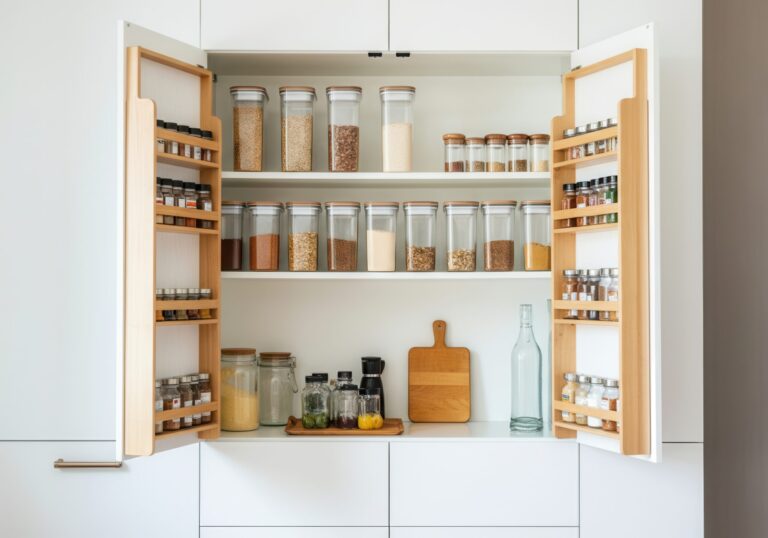
The great thing about kitchen pantry door storage is that it’s one of the easiest ways to reclaim usable space without changing the basic layout of your kitchen. It’s efficient, cost‑effective, and instantly rewarding. Most people underestimate how much vertical space a standard pantry door provides, yet that’s exactly where some of your most frequently used items could live.
From a design perspective, it’s not just about squeezing in a few extra shelves. It’s about creating a more intuitive kitchen, one where function meets form. A well‑designed door storage system naturally streamlines your cooking routine by keeping essentials within reach while visually decluttering countertops and cupboards. That interplay between ease and order makes a noticeable difference, especially in smaller kitchens or open‑concept layouts where every detail contributes to the overall look and flow of the space.
If you’re short on storage or simply want your pantry to look and feel more intentional, start by assessing your door. Think about what you access most: spices, condiments, snacks, or cleaning supplies, and imagine how they could be arranged vertically, rather than stashed away in a deep shelf. It’s a small adjustment that often creates a big impact.
Types of Kitchen Pantry Door Storage Solutions
The key to creating effective kitchen pantry door storage is matching the right type of organiser to your space and lifestyle. There isn’t a one‑size‑fits‑all approach here; what works well in a busy family kitchen might not be ideal for a small apartment. Let’s look at a few reliable solutions that blend functionality with style.
1. Over‑the‑Door Racks and Organisers
For most kitchens, over‑the‑door racks are the easiest entry point into door storage. They’re simple to install, usually with no drilling required, and they make excellent use of the door’s height. You’ll find them in a variety of materials, from sleek chrome to matte black finishes, which means they can blend seamlessly with nearly any interior style.
If you’re tight on pantry shelf space, these racks can hold anything from spices and snacks to smaller cooking oils or jars. They’re especially handy for renters who can’t make permanent changes, but still want functional, attractive pantry door storage.
2. Custom Door Shelving
If you’re after something more built‑in and cohesive, custom door shelving is a smart investment. These can be designed to match your cabinetry, giving your pantry a polished, integrated look. Custom setups also tend to handle heavier items, such as canned goods or glass jars, without wobbling or warping over time.
From an interior design perspective, custom shelving allows you to maintain consistency in colour, finish, and overall kitchen aesthetic. It’s also a chance to get creative: you can play with shelf depths, mix open racks with bins, or even add discreet built‑in lighting for a soft glow when you open the door.
3. Hanging Baskets and Hooks
Sometimes, a simple solution is all you need. Hanging baskets or hooks on the inside of your pantry door are perfect for frequently used items, small produce bags, cleaning gloves, or lightweight kitchen tools. Wire baskets offer a more open, airy look, while woven styles can add warmth and texture to your kitchen pantry door storage setup.
If you like a natural, lived‑in aesthetic, this approach is both functional and visually appealing. It’s also easy to adjust or rearrange as your storage needs change.
4. Magnetic or Pegboard Systems
For those who prefer a clean, modern, or industrial design style, magnetic and pegboard setups can be game‑changers. Magnetic panels are excellent for holding metal spice tins or small tools, while pegboards create a flexible system that can be rearranged whenever you want to refresh your layout.
What’s great about these systems is how customisable they are. You can add shelves, hooks, or small containers as needed, all while keeping a sleek, minimalist profile that suits contemporary kitchens perfectly.
When you choose the type that best fits your space, you set the foundation for a pantry that truly works for you. The next step is refining which design will complement your kitchen’s layout and overall aesthetic.
How to Choose the Right Pantry Door Storage for Your Kitchen
Selecting the right kitchen pantry door storage solution depends on more than just the available space; it’s about how you use your kitchen day‑to‑day and what kind of look you want to achieve. A well‑chosen setup should feel like it belongs, not simply like an add‑on. Here’s how to make that decision with intention and confidence.
1. Start by Measuring and Assessing Your Space
Before buying or installing anything, measure your pantry door’s height and width carefully. Check how much clearance you have when the door opens fully, especially if it swings near cabinets or appliances. These small details determine how deep your shelves or baskets can be without causing frustration later on.
If you’re working with a sliding or French pantry door, you’ll have to get a little creative. In those cases, look for slim, low‑profile organisers or interior‑mounted systems that don’t interfere with door movement.
2. Define the Purpose of Your Door Storage
Think about what items you reach for every day. Are you looking to organise spices, snacks, or baking supplies? Maybe you need a home for cleaning products or reusable grocery bags. Defining the purpose will help you choose the right structure: narrow spice racks for small containers, deeper wire shelves for snacks, or hooks for lightweight tools.
The beauty of kitchen pantry door storage is that it can adapt to meet your exact needs. When you treat the door as another functional part of your design, it becomes an organiser that helps you move through your kitchen more efficiently.
3. Consider Weight and Durability
It’s tempting to load every inch of your new pantry door with jars and cans, but keep balance in mind. Check the weight limits of your chosen storage system and avoid overloading. Over‑the‑door racks and hanging baskets are intended for lighter items, while custom shelving can handle heavier products more comfortably.
Choosing durable materials, like metal with a powder‑coated finish or sturdy wood, ensures your investment lasts. And since kitchen environments can get humid, particularly near cooking areas, opting for moisture‑resistant finishes can help maintain your system’s appearance over time.
4. Align with Your Kitchen’s Overall Style
Even functional storage deserves to look good. Think about your kitchen’s colour palette, hardware, and overall style. Matte black racks blend seamlessly into modern designs, while natural wood tones complement rustic or transitional interiors. Clear acrylic bins can also add a more streamlined, contemporary touch.
Your kitchen pantry door storage doesn’t have to stand out; it should flow naturally with the rest of your space. Done right, it becomes an understated design element that quietly enhances both practicality and aesthetics.
Once you’ve narrowed down your options, it’s time to focus on the fun part, styling. The next section will dive into how to add personality and polish to your pantry door system while keeping it functional and well-organised.
Design and Styling Tips for a Cohesive Look
Good kitchen pantry door storage isn’t just about adding shelves and baskets; it’s about creating visual harmony. The best storage setups look intentional, as if they were always part of your kitchen’s design, not something you attached later. This section focuses on how to style your pantry door so it feels both functional and aesthetically refined.
1. Keep It Cohesive with Colour and Material
Start by aligning your storage materials with your kitchen’s existing finishes. If you have warm wood cabinetry, consider natural wood or woven baskets to tie the look together. In a modern space with clean lines and cooler tones, you might lean toward matte metal, acrylic, or glass containers for a streamlined effect.
This simple attention to tone and texture keeps your pantry door storage from looking like a random collection of organisers. Instead, it becomes a natural extension of your design story.
2. Label Everything (But Keep It Subtle)
Labels aren’t just functional; they can also add a touch of design polish. Simple, uniform labelling gives your pantry a clean, professional look and helps everyone in the household keep things organised.
Use minimal typography or clear adhesive labels for a modern, uncluttered aesthetic. Chalkboard tags or handwritten labels can soften the look if you prefer something more casual.
3. Mix Open and Closed Storage
Balance is key when it comes to door organisation. Open shelves keep frequently used items within easy reach, while small bins or baskets can hide less attractive essentials, like refills, packets, or snacks.
If you want to maintain visual calm, stick to three or four container styles that coordinate but don’t perfectly match; this creates visual interest without looking busy. Remember, your kitchen pantry door storage should support both order and beauty.
4. Add Lighting for Function and Ambience
A bit of lighting can elevate even the simplest setup. Battery‑powered LED strips or motion‑activated puck lights can instantly make your pantry feel more luxurious. Not only do they make it easier to see what’s on each shelf, they also highlight your organisation system, subtly turning a practical feature into a design detail.
Lighting is particularly useful if your pantry is in a darker corner of the kitchen. When thoughtfully placed, it adds both visibility and warmth, making the space feel more inviting.
A well‑styled pantry door not only saves space but also enhances your kitchen’s overall look. It’s one of those small improvements that quietly elevates how a space feels to live in. Next, we’ll go over how to keep everything functional and tidy in the long run.
Maintenance and Organisation Tips
Once your kitchen pantry door storage is set up and looking great, keeping it organised is the real key to making it last. The goal isn’t perfection; it’s creating a system that stays functional and easy to maintain. With a few small habits, you can keep your pantry door as tidy as the day you installed it.
1. Declutter Regularly
Every few months, take a few minutes to reassess what’s hanging on the door. Items have a way of drifting into spaces simply because there’s room for them. Start by removing everything and giving the shelves or baskets a quick wipe‑down. Then, only put back what you actually use.
This periodic reset keeps your pantry door storage purposeful and prevents it from becoming another overstuffed corner of your kitchen.
2. Group Similar Items Together
Organisation works best when it’s intuitive. Keep breakfast items together, spices in one zone, and cleaning supplies in another. Grouping similar products reduces visual clutter and makes it easier to maintain the layout you worked hard to create.
If you’re using bins or baskets, label them so that every item has a clear home. Over time, these small details make the system effortless to keep up with.
3. Avoid Overloading Shelves
As practical as kitchen pantry door storage is, it still has its limits. Too much weight can strain hinges or cause racks to sag over time. Keep heavier products, like large jars or cans, on your main pantry shelves, and use the door for lightweight items.
Evenly distributing weight not only protects the door but also preserves its smooth operation, which adds to the longevity of your setup.
4. Refresh the Look Seasonally
A little refresh can go a long way in keeping your pantry door inspiring. Swap out bins, update labels, or add new shelf liners for a quick change. This can be as simple as introducing different materials, like woven textures in summer or dark metal finishes in winter, to subtly update your kitchen’s appearance without a full redesign.
This small maintenance step not only keeps the space feeling fresh but also makes you more likely to stay organised.
Maintaining a clean and organised kitchen pantry door storage system doesn’t need to be a chore. With mindful upkeep and a clear structure, your pantry will continue to serve as both a design feature and a functional space for everyday living.
Budget-Friendly vs. Custom Solutions
One of the great things about kitchen pantry door storage is its flexibility; you can create a stylish, organised system on just about any budget. Whether you prefer simple DIY upgrades or want a fully integrated custom design, there’s a smart solution that fits your space, aesthetic, and lifestyle.
1. Budget-Friendly and DIY Options
If you’re starting small or working within a modest budget, there are plenty of ways to make a big impact without spending much. Over‑the‑door racks, adhesive hooks, or adjustable baskets can all transform your pantry door in a single afternoon.
These ready‑made options are ideal if you rent your home or simply want an affordable, low‑commitment way to test how door storage works for your routine. Many of these systems can be adjusted or layered over time, which makes them both cost‑effective and adaptable.
To make a DIY approach feel polished, stick to a cohesive colour scheme and consistent container style. It’s not about how much you spend, it’s about thoughtful design choices that make even simple materials look intentional.
2. Semi-Custom Systems
Semi‑custom options are a great middle ground. You can purchase modular storage components, like adjustable shelving systems or pegboard panels, and configure them to your exact space. Many brands now offer kits that can be mixed and matched, giving you the flexibility of customisation without the price tag of a fully bespoke installation.
Visually, semi‑custom systems also elevate your pantry’s look. Choose finishes and details that echo your kitchen hardware for a coordinated feel without needing professional carpentry.
3. Custom-Built Door Storage
If long‑term quality and seamless aesthetics are your priorities, investing in custom pantry door storage can be well worth it. A professional design allows you to match cabinetry finishes exactly, optimise every inch of usable space, and accommodate heavier or specialty items with ease.
Custom builds also open creative opportunities; hidden lighting, built‑in pullouts, or even soft‑close shelving can make your pantry door feel like a true design feature. While the upfront cost is higher, the end result often adds both daily convenience and long‑term value to your kitchen.
When choosing between budget, semi‑custom, or fully custom solutions, think about your long‑term goals. If your home is temporary or frequently updated, a modifiable system is likely the best fit. If you’re designing your forever home, a tailored, built‑in approach can be an investment that continues to pay off for years.
What makes kitchen pantry door storage so satisfying is how transformative it can be without requiring a full renovation. With a bit of planning, you can reinvent one of the kitchen’s most overlooked surfaces into something both useful and beautiful. Whether you choose simple over‑the‑door baskets or a custom-built-in system, every well-organised inch adds to your kitchen’s comfort and flow.
There’s something undeniably magical about Art Deco interior design that keeps drawing me back to this style. I’ve seen how incorporating Art Deco home interior design ideas can transform an ordinary space into something extraordinary. The style’s perfect blend of glamour and sophistication has captivated homeowners and designers alike for decades. I’m thrilled to share my favourite ways to bring this timeless aesthetic into your home.
I’ll walk you through 15 stunning Art Deco home interior design ideas that can help you achieve that perfect luxe look. Whether you’re planning a complete renovation or looking to add just a touch of that signature Art Deco glamour, these tips will help you create the space you’ve been dreaming of.
Geometric Patterns and Bold Lines
If there’s one element that truly defines Art Deco home interior design, it’s the bold use of geometric patterns. These dramatic designs are the heart and soul of the style, and they have an incredible way of transforming even the most basic room into something spectacular.
Here’s my approach to incorporating these patterns:
Start with one bold geometric element as your focal point. I always suggest beginning with either wallpaper or a large area rug – these anchor pieces set the tone for the entire space.
Layer in angular furniture pieces that echo your main pattern. Think zigzag-patterned throw pillows or a stunning cabinet with geometric overlay.
Mix different scales of patterns, but keep them in the same colour family. One of my favourite combinations is pairing a large-scale geometric wallpaper with smaller-patterned cushions or curtains.
Pro tip: If you’re nervous about committing to bold geometric wallpaper, try starting with removable wallpaper panels or focus on incorporating geometric patterns through art pieces and textiles. This is a fantastic way to experiment with Art Deco home interior design ideas without making permanent changes.
Remember, the key to successful Art Deco pattern play is confidence – this isn’t a style for the timid! I always tell my clients that if they’re going to embrace Art Deco, they should embrace it. The beauty of these geometric patterns is that they create an instant focal point and set the stage for all your other Art Deco elements to shine.
These striking patterns aren’t just decorative; they’re conversation starters. The impact of a bold geometric design element is undeniable – it’s exactly the kind of statement we’re looking for with Art Deco home interior design. These patterns command attention and exude confidence, creating spaces that feel both sophisticated and dramatic.
Luxurious Metallics
Nothing says Art Deco home interior design quite like the gleam of metallic finishes. The way metals catch and reflect light adds that essential layer of glamour that’s so characteristic of this style. Gold, brass, and chrome are the holy trinity of Art Deco metallics, and I never tire of seeing how they can elevate a space.
Here’s how I love to incorporate these luxurious elements:
Start with your hardware: Door handles, cabinet pulls, and light switches in polished brass or chrome make for an immediate Art Deco upgrade.
Layer in larger metallic pieces: Think mirrors with metal frames, side tables with brass legs, or chrome-finished bar carts.
Mix your metals thoughtfully: While traditional Art Deco favoured single metal tones, modern interpretations can beautifully blend different metallics – just keep them in the same temperature family.
The key is to distribute these metallic elements evenly throughout your space. I find that treating metals like jewellery for your room works perfectly – they should enhance rather than overwhelm. A metallic ceiling medallion paired with matching wall sconces, for instance, creates a cohesive look that draws the eye around the room.
Pro tip: When incorporating metallics into your Art Deco home interior design ideas, remember that a little shine goes a long way. Balance these gleaming surfaces with rich, matte textures like velvet or wool to create depth and visual interest.
One of my favourite ways to make a statement is with a large metallic piece – perhaps an oversized sunburst mirror or a striking gold-leafed cabinet. These signature pieces become natural focal points while embodying the luxury and drama that make Art Deco so appealing.
Statement Lighting
If there’s one element that can make or break your Art Deco home interior design, it’s lighting. Art Deco lighting fixtures are like functional sculptures, commanding attention whether they’re switched on or off.
The most impactful Art Deco lighting features include:
Tiered chandeliers with geometric glass panels
Sconces with stepped designs and metallic finishes
Pendant lights featuring clean lines and frosted glass
When selecting lighting, look for pieces that incorporate typical Art Deco motifs – sunbursts, fan shapes, and geometric patterns. The right fixture can become the cornerstone of your entire design scheme, informing the rest of your decor choices.
What makes Art Deco lighting so special is its ability to serve as both illumination and art. During the day, these fixtures act as sculptural elements, while at night, they create dramatic shadow plays and lighting effects that transform your space.
Remember, the placement of your lighting is just as important as the fixtures themselves. Consider creating layers of light with a mix of ceiling fixtures, wall sconces, and table lamps. This layered approach not only provides practical illumination but also adds depth and drama, which are essential elements in Art Deco home interior design.
Rich Colour Palettes
The colours you choose for your Art Deco home interior design set the stage for drama and sophistication. What I love most about Art Deco colour schemes is their boldness – these aren’t your typical safe, neutral palettes. Instead, we’re talking about colours that make a statement and leave an impression.
The most striking Art Deco colour combinations include:
Deep emerald green paired with gold and black
Sapphire blue with silver and cream
Ruby red combined with chrome and white
Rich tobacco brown with bronze and ivory
When working with these bold colours, I find it’s best to follow the 60-30-10 rule: 60% of your space in a dominant colour, 30% in a secondary colour, and 10% in an accent colour. This creates balance while maintaining that signature Art Deco drama.
Pro tip: Start with one bold colour you absolutely love and build your palette around it. The walls don’t always need to be the boldest element – a deep-coloured velvet sofa can be just as impactful against neutral walls.
Mirrored Surfaces
Nothing captures the glamour of Art Deco home interior design quite like the strategic use of mirrors and mirrored surfaces. These reflective elements add depth, light, and a touch of Hollywood golden age glamour to any space.
Key ways to incorporate mirrored elements:
Install mirror panels with geometric divisions
Choose furniture pieces with mirrored accents
Add mirrored trays and decorative objects
Consider an Art Deco-style mirror as wall art
The trick with mirrors is to place them thoughtfully. Position them to reflect something interesting – perhaps your statement lighting or a beautiful piece of art. This doubles the impact of your best decorative elements while creating that sought-after Art Deco sparkle.
One word of caution: while mirrors are fantastic, too many can feel overwhelming. I always suggest choosing one or two significant mirrored pieces rather than filling every surface with reflection.
Sophisticated Materials
The materials you choose for your Art Deco home interior design are crucial for creating that luxurious feel. This style is all about combining different textures and surfaces to create a rich, layered effect.
Essential Art Deco materials include:
Polished woods (especially exotic varieties)
Plush velvets
Smooth lacquer finishes
High-gloss marble
Sleek glass
The key to working with these materials is contrast. Pair smooth, glossy surfaces with soft, tactile fabrics. Consider a lacquered sideboard topped with velvet-covered boxes, or marble floors softened by a plush geometric rug.
When selecting furniture pieces, look for:
High-sheen wood finishes
Upholstery in luxurious fabrics
Pieces combining different materials
Clean lines with sophisticated details
Remember, quality matters in Art Deco design. While there are always ways to achieve the look on a budget, investing in a few key pieces made from authentic materials will elevate your entire space.
Bold Artwork and Wall Panels
Art Deco home interior design isn’t complete without making a statement through your wall treatments. The artwork and wall details of this era were never meant to fade into the background – they’re intended to be bold, dramatic, and impossible to ignore.
Key elements to consider:
Large-scale artwork featuring geometric patterns
Stylised figures and motifs
Decorative wall panels with stepped designs
Bold murals with metallic accents
Sculptural wall installations
When selecting artwork, look for pieces that embrace typical Art Deco themes: sunbursts, chevrons, stylised animals, and figurative works with elongated forms. I particularly love how oversized pieces can transform an entire wall into a focal point.
For wall panels, consider:
Wood panels with geometric inlays
Upholstered panels in luxe fabrics
Metal or mirror panels with decorative overlays
Painted panels with metallic details
The beauty of Art Deco wall treatments is their versatility. You might opt for a single dramatic mural behind your sofa, or create an entire wall of geometric panels. Whatever you choose, make sure it complements rather than competes with your other Art Deco elements.
Streamlined Furniture
The furniture in Art Deco home interior design tells a story of elegance through form. These pieces are all about clean lines and curved edges, creating a sense of movement while maintaining sophistication.
Essential furniture characteristics include:
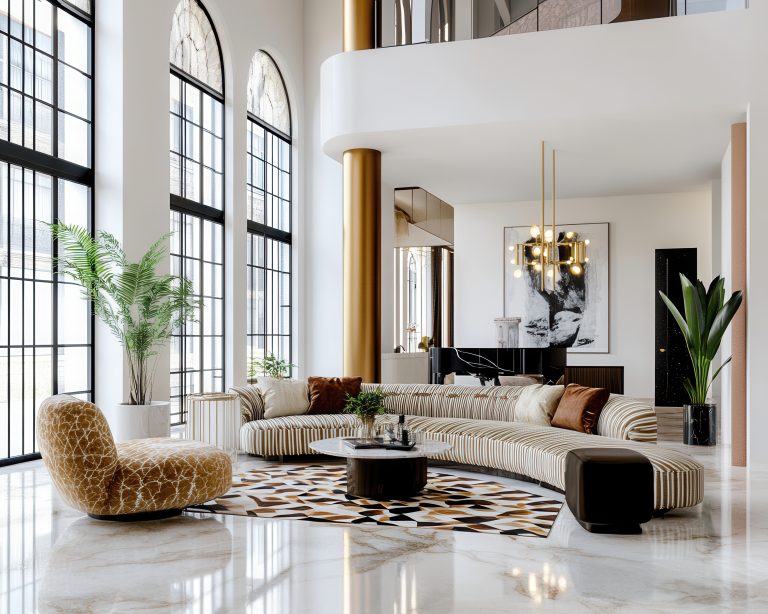
Curved sofas and club chairs
Streamlined silhouettes
Built-in seating nooks
Furniture with stepped or waterfall edges
Pieces that combine different materials
When selecting furniture, I always recommend focusing on:
Low-profile pieces with strong horizontal lines
Rounded corners and smooth curves
Symmetrical arrangements
Pieces that make a statement without being bulky
The key to successful Art Deco furniture placement is balance. Create conversation areas that feel intimate yet sophisticated, and don’t be afraid to mix curved pieces with angular ones – this contrast is what makes Art Deco so dynamic.
Pro tip: If you’re working with a smaller space, choose fewer, more impactful pieces rather than trying to squeeze in too many elements. A single spectacular curved sofa can have more impact than multiple smaller pieces.
Remember, comfort shouldn’t be sacrificed for style. The best Art Deco rooms combine visual drama with practical livability. Look for pieces that invite you to sit and stay while maintaining those classic Art Deco lines.
When it comes to upholstery, opt for:
Rich, solid colours
Geometric patterns
Luxurious textures
High-quality fabrics that will stand the test of time
The beauty of Art Deco furniture lies in its ability to be both functional and sculptural. Each piece should work as part of your overall design while being striking enough to stand on its own.
Exotic Wood Finishes
The use of luxurious woods is one of the most distinctive features of Art Deco home interior design. These aren’t your everyday wood finishes – we’re talking about spectacular grains and rich colours that immediately elevate a space’s sophistication level.
Key wood varieties to consider:
Macassar ebony with its dramatic striped grain
Bird’s eye maple for its unique spotted pattern
Zebra wood offers bold, natural stripes
Burled walnut with its swirling patterns
Rosewood for its deep, rich tones
The beauty of these woods lies in their natural patterns. Whether it’s through furniture pieces, wall panels, or built-ins, these materials add organic geometry to your Art Deco scheme. I particularly love how they catch the light and create depth in a space.
Using exotic woods effectively:
Choose one statement piece as your anchor
Mix different woods while keeping finishes consistent
Balance dark and light wood tones
Consider wood inlays for added detail
Pro tip: If authentic exotic woods are beyond your budget, there are excellent veneers and alternatives available that can create a similar effect. The key is choosing options with strong, distinctive grain patterns.
Statement Staircases
In Art Deco home interior design, staircases aren’t just functional elements – they’re architectural showpieces that can define an entire space. Whether you’re working with a grand curved staircase or a more modest design, there are plenty of ways to incorporate Art Deco elements.
Essential staircase features include:
Geometric railings with repeated patterns
Chrome or brass handrails
Stepped details in the balustrades
Dramatic runner patterns
Contrasting materials
The most impactful staircase elements combine:
Clean lines with decorative details
Mixed materials like wood and metal
Strategic lighting to highlight design features
Pattern play through flooring or runners
When designing or updating a staircase, consider:
The visual weight of different elements
How light plays off metallic surfaces
The balance between plain and decorative components
The transition between different levels of your home
Even if you’re working with an existing staircase, there are ways to add Art Deco flair:
Update balusters with geometric designs
Add metallic accents to handrails
Install a bold geometric runner
Create drama with wall treatments alongside the stairs
Remember, your staircase should work in harmony with your other Art Deco elements while still making its own statement. Think of it as a piece of functional sculpture that helps tell your home’s design story.
The real magic happens when you combine these architectural elements with thoughtful lighting and decorative details. A well-designed Art Deco staircase catches the eye while guiding it upward, creating a sense of anticipation for what’s to come.
Luxe Window Treatments
Window treatments in Art Deco home interior design are never an afterthought – they’re an integral part of the room’s architecture and overall drama. The right window treatments can frame your views while adding that essential layer of Art Deco sophistication.
Key elements to consider:
Layered treatments with sheer and heavy fabrics
Strong horizontal banding
Metallic hardware and finials
Geometric patterns in fabric choices
Dramatic height with floor-to-ceiling designs
When selecting window treatments, think about:
Heavy silk or velvet for the main curtains
Sheer panels with subtle geometric patterns
Metal rods with decorative ends
Valances with stepped or angular designs
Automated systems hidden behind pelmets
Pro tip: Height is crucial in Art Deco design. Mounting curtains close to the ceiling and letting them fall to the floor creates that sought-after sense of drama and luxury.
The hardware you choose is just as important as the fabric:
Choose bold finials that echo other room elements
Consider chrome, brass, or black metal finishes
Look for geometric shapes in curtain rings and holdbacks
Don’t shy away from substantial curtain rods
Floor Design
The floor is your room’s largest surface area, and in Art Deco home interior design, it deserves special attention. A well-designed floor creates a foundation that supports and enhances all your other decorative elements.
Signature flooring options include:
Geometric pattern tiles
Inlaid wood designs
Bold marble patterns
High-contrast combinations
Luxurious carpets with Art Deco motifs
The key to successful Art Deco flooring lies in:
Strong pattern definition
Careful material selection
Thoughtful layout planning
Balance with other room elements
When working with hard surfaces, consider:
Contrasting materials like wood and marble
Geometric inlays that define spaces
Borders that frame room areas
Patterns that direct traffic flow
For those working with carpets and rugs:
Choose bold geometric patterns
Look for high-quality materials
Consider custom designs for the perfect scale
Use rugs to define separate areas within a space
Remember, your flooring should work in harmony with your wall treatments and furniture. While it can be bold, it shouldn’t compete with other key elements in your space. Think of it as the sophisticated canvas upon which your Art Deco story unfolds.
Pro tip: If you’re hesitant about committing to permanent patterned flooring, start with a dramatic Art Deco rug. It can provide the same impact while offering flexibility for future changes.
Bathroom Glamour
The bathroom presents a perfect opportunity to fully embrace Art Deco home interior design in all its glamorous glory. This is one space where you can really indulge in luxury and create a stunning private retreat.
Essential Art Deco bathroom elements:
Black and white tile combinations
Geometric tile patterns
Beveled mirrors
Chrome or gold fixtures
Marble vanity tops
Stepped architectural details
What makes an Art Deco bathroom special is attention to detail:
Consider a statement vanity mirror with a geometric design
Install wall sconces with frosted glass shades
Choose fixtures with clean, angular lines
Add metallic accents through hardware and accessories
When selecting tiles, think about:
Classic black and white combinations
Geometric patterns for feature walls
Marble with strong veining
Contrasting border details
Small hexagonal tiles for an authentic period feel
Pro tip: Even in smaller bathrooms, you can create impact through thoughtful material choices and strategic placement of mirrors. The key is to maintain balance while incorporating those signature Art Deco elements.
Ceiling Details
In Art Deco home interior design, the ceiling is often referred to as the fifth wall, and it deserves just as much attention as any other surface. A well-designed ceiling can completely transform the feel of a room.
Key ceiling elements include:
Stepped crown moulding
Geometric ceiling medallions
Painted or applied patterns
Coffered details
Integrated lighting designs
When planning your ceiling design, consider:
The room’s height and proportions
How light fixtures will integrate
The balance with wall treatments
The overall scale of patterns
Lighting plays a crucial role in ceiling design:
Centre medallions that complement chandeliers
Cove lighting to highlight architectural details
Recessed lighting positioned to enhance patterns
Wall sconces that create interesting shadows
Remember that ceiling treatments should enhance rather than overwhelm your space. The goal is to draw the eye upward naturally, creating a sense of height and grandeur while maintaining harmony with the rest of your design elements.
For rooms with lower ceilings:
Use lighter colours to create height
Keep patterns scaled appropriately
Consider subtle metallic details
Focus on lighting to create depth
Pro tip: If architectural ceiling details aren’t possible in your space, consider using paint or wallpaper to create pattern and interest. Even simple geometric designs can make a significant impact when executed well.
Accessorising
The art of accessorising in Art Deco home interior design is about selecting pieces that both complement and elevate your space. These finishing touches are what bring personality and completeness to your Art Deco vision.
Key decorative elements to consider:
Sculptural table objects in metal or glass
Geometric bookends and vases
Sunburst or fan-shaped wall decorations
Period-inspired clocks
Crystal or cut glass decanters
Abstract figurines
When selecting accessories, focus on:
Quality over quantity
Strong shapes and clean lines
Materials that reflect light
Pieces that tell a story together
Scale and proportion
Pro tip: Group accessories in odd numbers and vary their heights. This creates more interesting compositions while maintaining that essential Art Deco balance between order and drama.
Remember, every piece should serve a purpose:
Choose items that reflect light and add sparkle
Include both decorative and functional pieces
Mix materials for visual interest
Create small vignettes throughout your space
Practical Tips Section
Now that we’ve covered the essential elements, let’s talk about how to bring it all together successfully in your Art Deco home interior design.
Key considerations for implementation:
Budget-Friendly Approaches:
Start with one statement piece and build around it
Use paint to create geometric patterns
Incorporate metallic finishes through accessories
Choose quality reproductions for larger pieces
Focus on lighting as a transformative element
Mixing Modern and Art Deco:
Keep the colour palette consistent
Choose modern pieces with Art Deco-inspired lines
Use contemporary artwork that echoes Art Deco patterns
Balance old and new elements carefully
Maintain clean lines throughout
Common mistakes to avoid:
Overcrowding spaces with too many patterns
Mixing too many different metals
Choosing undersized lighting fixtures
Forgetting about negative space
Overlooking the importance of quality materials
Pro tip: When in doubt, edit. Art Deco style is about making bold statements, but each element needs room to breathe and be appreciated.
Creating a successful Art Deco home interior design isn’t just about following a checklist – it’s about understanding how all these elements work together to create something truly spectacular. Whether you’re incorporating just a few Art Deco touches or going all-in with a complete transformation, the key is to maintain balance while embracing the style’s inherent drama.
Are you looking for the best small bathroom makeover ideas? Read along to discover 13 tips and tricks!
If you’re like me, you know that small bathrooms can be a bit of a design challenge. But don’t worry, I’ve got some great small bathroom makeover ideas that can really transform your space.
Whether you’re dealing with a cramped layout or just want to refresh the look, these tips will help you make the most of every square inch. Let’s dive in and explore some practical and stylish solutions that can turn your small bathroom into a cosy and functional oasis.
Best Small Bathroom Makeover Ideas!
1. Optimise Vertical Space
One of my favourite small bathroom makeover ideas is to think vertically. When floor space is limited, the walls become your best friend. By utilising vertical space, you can keep your bathroom organised and spacious. Tall shelving units are a great option for storing towels, toiletries, and decorative items. These can be placed in corners or above the toilet to maximise space. Wall-mounted cabinets are another excellent choice, especially when placed above the toilet or sink to keep essentials within reach. Opt for cabinets with mirrored fronts to add functionality and style.
Hooks and racks are perfect for hanging towels, robes, or even baskets for additional storage. Consider using adhesive hooks for a no-drill solution that won’t damage your walls. By looking up and utilising the vertical space, you’ll discover a whole new world of possibilities for your small bathroom. Plus, it gives you a chance to display some cute decor items or plants, adding a touch of personality to the space.
2. Light and Bright Colour Schemes
Alright, let’s talk colour. One of the simplest small bathroom makeover ideas is to go for a light and bright colour scheme. Light colours can really open up a space and make it feel larger than it actually is. Soft whites, pastels, or light greys work wonders in small spaces, reflecting light and creating an airy atmosphere. These shades can make your bathroom feel fresh and inviting, like a little retreat.
To add some personality without overwhelming the space, consider incorporating accent colours through accessories like towels, rugs, or shower curtains. Reflective surfaces, such as glossy finishes on tiles or paint, can further enhance the brightness and openness of the room. By carefully selecting your colour palette, you can create a cohesive and visually appealing space that feels much larger than it is.
3. Mirrors to Create an Illusion of Space
Now, mirrors are a game-changer when it comes to small bathroom makeover ideas. A well-placed mirror can do wonders by reflecting light and creating the illusion of more space. Consider placing a large mirror above the sink to double the visual space. Mirrored cabinets are also a great option, providing storage while enhancing the room’s depth. Decorative mirrors in different shapes and styles can add personality and serve as a focal point.
Mirrors not only make your bathroom feel larger, but also add a touch of elegance and sophistication. They can reflect natural light, brightening up the space and making it feel more open. By strategically placing mirrors, you can create a sense of depth and dimension, transforming your small bathroom into a more spacious and inviting area.
4. Compact and Multifunctional Fixtures
When space is tight, every inch counts. That’s why compact and multifunctional fixtures are key in small bathroom makeover ideas. Look for sinks, toilets, and bathtubs that are designed to save space. Compact sinks and toilets can free up valuable floor space, making the room feel less cramped. Vanities with built-in storage are a lifesaver, keeping your bathroom clutter-free and organised.
Consider utilising corners for sinks or storage to maximise space. Corner fixtures can be a great solution for awkward layouts, allowing you to make the most of every inch. By choosing fixtures that serve multiple purposes without sacrificing style, you’ll be amazed at how much more functional your bathroom can become. It’s all about finding the right balance between form and function.
5. Sliding Doors for Space Efficiency
If you’re dealing with a door that swings into your already small bathroom, consider switching to a sliding door. It’s one of those small bathroom makeover ideas that can make a big difference. Sliding doors save space by eliminating the need for door clearance, allowing you to use the area more efficiently. They also add a sleek, modern touch to your bathroom, enhancing its overall aesthetic.
There are various design options to choose from, such as barn doors, pocket doors, or glass sliders. Each style offers its own unique charm and can complement your bathroom’s decor. Sliding doors not only improve space efficiency but also add a touch of flair to your design. It’s a practical solution that opens up the room and makes it feel less cramped.
6. Clever Storage Solutions
Let’s face it, storage is always a challenge in small bathrooms. But with some clever small bathroom makeover ideas, you can keep everything organised and within reach. Recessed shelves built into walls are a great way to save space and store toiletries. Built-in niches in the shower provide convenient storage without the need for bulky caddies.
Baskets and organisers can help keep items tidy and accessible. Consider using stackable bins or drawer organisers to maximise storage space. The goal is to have a place for everything, so your bathroom feels calm and clutter-free. By implementing these storage solutions, you can create a more functional and efficient space that meets your needs.
7. Use Glass and Transparent Materials
Incorporating glass and transparent materials is another fantastic small bathroom makeover idea. Glass shower doors, for instance, can make the room feel more open compared to a traditional shower curtain. They allow light to flow freely, enhancing the overall sense of space and airiness in your bathroom. Glass shelves can add a modern touch without crowding the space, providing a sleek and stylish storage solution.
Transparent accessories, such as clear containers or acrylic organisers, can create a seamless look and keep your bathroom looking tidy. These materials not only enhance the visual appeal of your bathroom but also contribute to a more open and inviting atmosphere. By using glass and transparent materials, you can create a sense of continuity and flow, making your small bathroom feel larger and more cohesive.
8. Statement Lighting Fixtures
Lighting can completely transform a space, and that’s especially true in small bathrooms. One of my favourite small bathroom makeover ideas is to incorporate statement lighting fixtures. Pendant lights hung above the vanity can add a chic and stylish touch, while wall sconces on either side of the mirror provide balanced lighting. LED strips under cabinets or around mirrors can create ambient light, enhancing the overall atmosphere.
The right lighting can add both function and flair, brightening up the room and serving as a focal point. It not only illuminates the space but also adds a touch of elegance and sophistication. By choosing unique and eye-catching lighting fixtures, you can elevate the design of your bathroom and create a more inviting and visually appealing space.
9. Incorporate Natural Elements
Bringing in natural elements is a great way to add warmth and texture to your small bathroom. Consider adding low-maintenance plants like ferns or snake plants, which thrive in humid environments. These little touches of greenery can make the space feel more inviting and fresh, creating a calming and relaxing atmosphere.
Incorporating natural materials, such as wood or stone, can add an organic and earthy feel to your bathroom. Use wooden accessories, like soap dishes or toothbrush holders, to add warmth and texture. Woven baskets can also provide additional storage while adding a rustic touch. By incorporating natural elements, you can create a more harmonious and balanced space that feels connected to nature.
10. Creative Use of Tiles
Tiles are a fantastic way to add character and style to your small bathroom. One of the best small bathroom makeover ideas is to get creative with tile patterns and textures. Consider using tiles to create a focal point, like an accent wall or a striking backsplash. You can play with different shapes, such as hexagons or subway tiles, to add visual interest.
Experiment with geometric or mosaic patterns to create a unique and personalised look. Textured tiles can add depth and dimension, making your bathroom feel more dynamic and visually appealing. The right tile design can make your bathroom feel unique and personalised, while also being practical and easy to clean. By getting creative with tiles, you can transform your small bathroom into a stylish and inviting space.
11. Minimalist Design Approach
When it comes to small spaces, less is often more. Adopting a minimalist design approach is one of the most effective small bathroom makeover ideas. Focus on decluttering and keeping only the essentials. Choose fixtures and decor with clean lines and simple forms to create a sense of openness and simplicity.
Stick to a neutral colour palette for a cohesive and serene look. This approach not only makes the space feel larger but also creates a calming and peaceful environment. By eliminating unnecessary distractions and focusing on the essentials, you can create a bathroom that feels open and airy, providing a sense of tranquillity and relaxation.
12. Add Personal Touches
Even in a small bathroom, there’s room for personal touches that reflect your style. Consider adding artwork, decorative items, or even a unique shower curtain that speaks to your personality. These small bathroom makeover ideas allow you to infuse the space with your own flair without overwhelming it.
Choose a few well-chosen pieces that add character and charm to your bathroom. Whether it’s a piece of art that you love or a decorative item that holds sentimental value, these personal touches can make your bathroom feel uniquely yours. By adding elements that reflect your personality, you can create a space that feels warm and inviting.
13. Smart Technology Integration
Finally, let’s talk about integrating smart technology into your small bathroom. This is one of those small bathroom makeover ideas that can really enhance convenience and efficiency. Consider automated lighting with motion sensors for hands-free operation. Smart mirrors with built-in lighting and defogging features can add a touch of luxury and modernity.
Bluetooth speakers can provide entertainment while you shower, making your bathroom experience more enjoyable. These tech-savvy additions can make your bathroom more functional and efficient, all while saving space and adding a touch of luxury. By incorporating smart technology, you can create a modern and innovative bathroom that meets your needs.
Incorporating these small bathroom makeover ideas can truly transform your space, making it both functional and stylish. Don’t be afraid to experiment and personalise your bathroom to reflect your unique taste and needs.