by Kesaa Interiors | DECOR & DIY, Dining Room, Lighting & Accessories, ROOMS
I have always been drawn to how modern dining room drapes can completely shift the look and feel of a space, often more than people expect from something as simple as window treatments.
In this post, I am sharing practical and design‑focused ideas to help you choose drapes that actually enhance your dining room rather than just filling a functional gap. From understanding how drapes influence light and proportion to spotting styles that feel current without being trend‑driven, this guide is designed to make your decisions easier and more confident. Whether you are refreshing an existing space or starting from scratch, these ideas will help you see your dining room with fresh eyes.
This post is all about the best modern dining room drapes to consider.
Why Modern Dining Room Drapes Matter in Interior Design
Modern dining room drapes do much more than cover a window. They help define the atmosphere of the room, control how light moves through the space, and tie together furniture, finishes, and colour choices in a way that feels intentional.
One of the biggest design advantages of drapes is their ability to add softness to a dining room, which is often filled with hard surfaces like timber tables, chairs, and flooring. The right drapery can balance those elements while still keeping the overall look clean and contemporary. Length, fabric choice, and how the drapes are hung all play a role in whether a dining room feels refined, relaxed, or overly heavy.
Drapes also influence how spacious a room feels. Floor‑to‑ceiling panels can visually lift the ceiling, while wider panels make windows appear larger. This is especially important in modern interiors, where proportion and simplicity are key. When chosen thoughtfully, modern dining room drapes become part of the architecture of the space rather than an afterthought.
Understanding the impact drapes have on light, scale, and mood sets the foundation for choosing styles that truly elevate your dining area, which is exactly what the next sections will explore.
How to Choose the Right Modern Dining Room Drapes
Choosing modern dining room drapes is less about following strict rules and more about understanding how different elements work together in your space. When the fabric, colour, and fit are right, drapes feel effortless and intentional rather than decorative for the sake of it.
Fabric Choices for a Modern Look
Fabric is one of the first things I look at because it sets the tone straight away. For modern dining rooms, natural and lightly textured fabrics tend to work best. Linen and linen blends are popular for a reason. They drape beautifully, soften the space, and let light filter through without feeling heavy. Sheer fabrics are ideal if you want to maximise daylight while still adding privacy, especially in open or light‑filled homes.
If your dining room needs a bit more warmth or structure, heavier fabrics like cotton blends or velvet can still feel modern when kept simple and well-tailored. The key is avoiding overly shiny or stiff materials, which can date a space quickly.
Choosing Colours That Feel Contemporary
Colour plays a big role in how modern dining room drapes are perceived. Neutrals like soft whites, warm beiges, greys, and taupes are easy to live with and work well in most interiors. They also allow furniture and lighting to take centre stage.
That said, drapes are a great opportunity to introduce deeper tones if the rest of the room is fairly restrained. Colours like olive, charcoal, or muted blue can add depth without overwhelming the space. The trick is to think about how the drapes relate to the walls, flooring, and dining table rather than treating them as a standalone feature.
Getting the Length and Hanging Style Right
Length and placement can make or break modern dining room drapes. Floor‑length panels are usually the best option, as they create a cleaner, more polished look. Hanging drapes closer to the ceiling, rather than directly above the window frame, helps draw the eye upward and makes the room feel more spacious.
In terms of hardware, simple rods or ceiling‑mounted tracks suit modern interiors best. Hidden tracks are especially effective if you prefer a minimal finish, while slim rods in black or brushed metal can add subtle contrast.
Once these foundational choices are in place, it becomes much easier to explore specific modern dining room drapes ideas that elevate the space without overcomplicating the design.
15 Modern Dining Room Drapes Ideas to Elevate Your Space
This is where modern dining room drapes really start to shine. Each of the ideas below focuses on a different way drapes can enhance your dining room, whether you prefer something light and understated or a look with more presence and contrast.
1. Floor‑to‑Ceiling Sheer Drapes
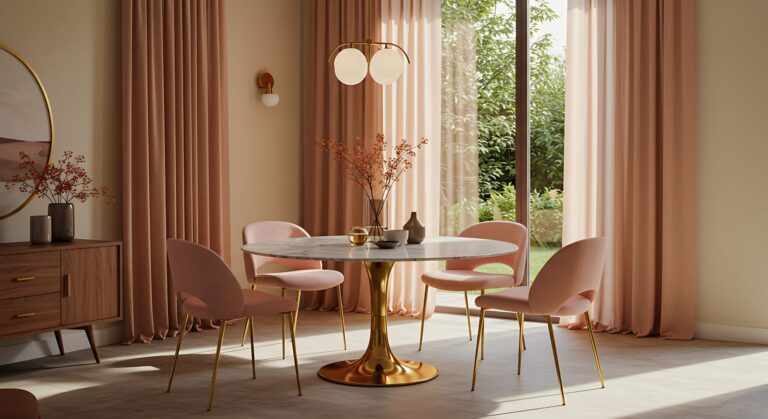
Sheer drapes hung from the ceiling to the floor instantly make a dining room feel taller and more open. They soften incoming light without blocking it, which is ideal for daytime dining areas. This style works especially well in modern homes that prioritise natural light and clean lines.
2. Neutral Linen Drapes for a Relaxed Modern Feel
Linen drapes in soft neutral tones are a go‑to for modern dining rooms. They add texture without drawing too much attention, allowing the dining table and chairs to remain the focal point. This option suits spaces that lean towards Scandinavian, coastal, or minimalist design.
3. Bold Coloured Drapes as a Feature Element
If your dining room is mostly neutral, bold drapes can add personality without clutter. Deep greens, navy, or warm earthy tones work well in modern interiors when paired with simple furniture and lighting. Keeping the fabric matte helps maintain a contemporary feel.
4. Charcoal or Black Drapes for a Sleek Look
Darker modern dining room drapes create a strong, confident look, particularly in spaces with good natural light. Black or charcoal panels pair well with timber, metal, and stone finishes, giving the dining room a refined, modern edge.
5. Layered Drapes for Flexibility and Depth
Layering sheer panels with heavier drapes offers both practicality and visual interest. This approach allows you to adjust light levels throughout the day while also adding depth to the window area. Keeping both layers in complementary tones ensures the look stays modern rather than busy.
6. Minimalist Drapes with Ceiling‑Mounted Tracks
Ceiling‑mounted tracks keep the focus on the drapes themselves rather than the hardware. This option is ideal for modern dining rooms where clean lines and simplicity are key. It also helps create the illusion of higher ceilings.
7. Textured Drapes for Subtle Interest
Textured fabrics such as lightly woven or slubbed materials add character without relying on bold patterns. This is a great option if you want modern dining room drapes that feel considered but not overpowering.
8. Neutral Drapes with Black Hardware
Pairing soft, neutral drapes with black rods or brackets introduces contrast in a controlled way. This combination works well in contemporary and industrial‑inspired dining rooms.
9. Soft Grey Drapes for Versatility
Grey drapes are incredibly adaptable and suit both warm and cool colour palettes. They offer a modern alternative to white while still feeling light and refined, especially in dining rooms with mixed materials.
10. Earth‑Tone Drapes for Warmth
Earthy shades like taupe, clay, and olive bring warmth to modern dining spaces. These colours pair beautifully with timber tables and natural finishes, creating a grounded and welcoming atmosphere.
11. Subtle Patterned Drapes
Modern patterns tend to be understated. Think fine lines, soft geometrics, or tonal designs. Patterned drapes can add interest while still feeling cohesive within a modern dining room.
12. Light‑Filtering Drapes for Open‑Plan Homes
In open‑plan layouts, light‑filtering drapes help define the dining area without closing it off. They maintain openness while adding a sense of structure to the space.
13. Monochromatic Drapes That Blend with the Walls
Matching drapes closely to the wall colour creates a seamless look that feels calm and contemporary. This approach works particularly well in smaller dining rooms where visual continuity matters.
14. High‑Contrast Drapes to Frame the Dining Area
High‑contrast modern dining room drapes can be used to frame the dining space, especially in open layouts. This helps visually anchor the dining table and makes the area feel more defined.
15. Tailored Drapes for a Polished Finish
Well‑measured, properly tailored drapes always look better than off‑the‑shelf options that do not quite fit. Custom‑length panels sit neatly on the floor and elevate the entire room with minimal effort.
Common Mistakes to Avoid with Modern Dining Room Drapes
Even well‑intentioned choices can hold a dining room back if a few key details are overlooked. Being aware of these common issues will help your modern dining room drapes feel considered and well-balanced rather than awkward or unfinished.
Hanging Drapes Too Low
One of the most frequent mistakes is hanging drapes directly above the window frame. This can shorten the visual height of the room. Mounting rods or tracks closer to the ceiling creates a more modern look and helps the space feel taller and more open.
Choosing the Wrong Fabric Weight
Fabric that is too heavy can overwhelm a dining room, especially if the space is on the smaller side or lacks natural light. On the other hand, very lightweight fabrics may not hang well or provide enough presence. Modern dining room drapes work best when the fabric weight suits the scale and light levels of the room.
Not Using Enough Width
Drapes that are too narrow tend to look skimpy and unfinished. Full, generously wide panels create soft folds and a more refined finish, even when the drapes are open. This is especially important for modern interiors, where proportions matter.
Ignoring How Light Is Used in the Space
Dining rooms are used at different times of day, so it is important to consider how much light you want to let in or block out. Drapes should support how the room functions, whether that means filtering daylight, reducing glare, or creating a more intimate atmosphere in the evening.
Modern dining room drapes are one of those design elements that quietly shape how a space feels day to day. When chosen with intention, they add softness, improve proportion, and bring the whole dining room together without needing extra decoration.
by Kesaa Interiors | Dining Room, ROOMS
This post is all about Dark Dining Room Ideas.
There’s something undeniably captivating about a dark dining room. The depth, the mood, the quiet confidence, it all creates a sense of intimacy that lighter spaces sometimes struggle to achieve. Designing with darker tones isn’t about making a bold statement for the sake of it; it’s about building an atmosphere that feels grounded and inviting.
That said, working with dark palettes can be tricky. Without balance, a space can quickly shift from warm and cocoon-like to heavy and confined. The good news? With the right approach, you can design a dining room that feels both dramatic and alive. In this post, we’ll explore practical dark dining room ideas that help you achieve that balance for a space that feels cosy, not cramped, and perfect for unrushed dinners or quiet evenings in.
Read this post for the best Dark Dining Room Ideas.
Understanding the Appeal of a Dark Dining Room
If you’ve ever stepped into a room with deep, moody tones, you know how instantly the mood shifts. Dark interiors draw you in; they feel layered, sophisticated, and deeply personal. In a dining room, those qualities translate into an environment that invites conversation and slows the rhythm of the day.
One of the most common misconceptions about dark spaces is that they make rooms feel small. The truth is, dark dining room ideas often create the perception of depth when handled correctly. Deep hues soften edges, making the boundaries of the room feel less defined, and therefore more expansive. The key is to balance shadow and light.
A thoughtfully designed dark dining room isn’t about creating a perfect showroom; it’s about designing a mood. Think of dark walls as a backdrop for texture, tone, and light to interact. Add contrast with natural materials; wood, brass, or soft fabrics, to bring warmth into the space. This balance is what transforms “dark” from heavy to harmonious.
Transitioning from inspiration to execution, let’s move into selecting the right tones, the foundation of every great dark dining room design.
Choosing the Right Dark Tones
Choosing the right colour palette is where dark dining room ideas really start to take shape. The hues you pick determine not only the overall aesthetic but also how the room feels when you’re standing in it. It’s less about selecting the “darkest” tone and more about understanding the kind of atmosphere you want to create.
Warm vs. Cool Dark Shades
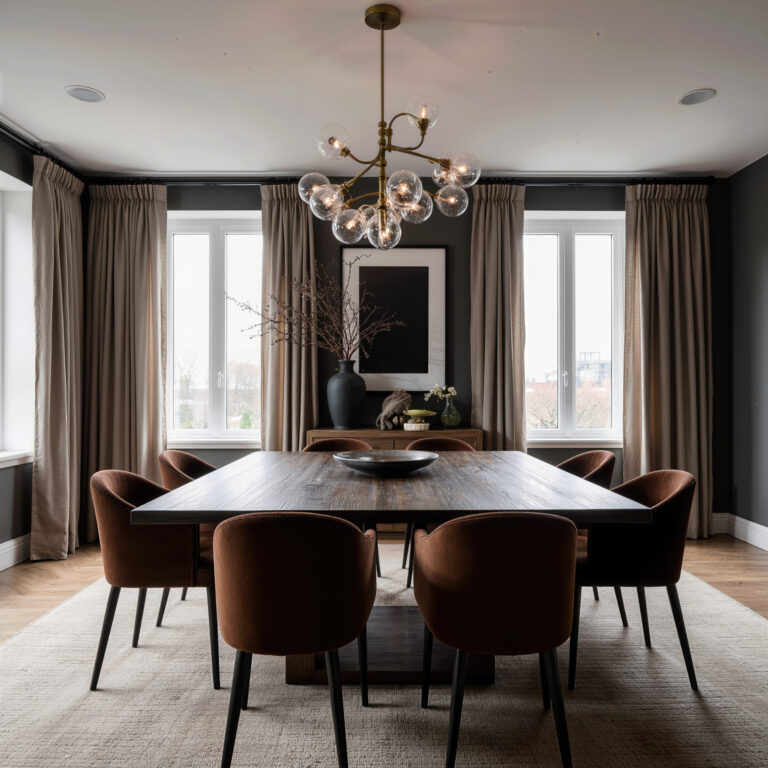
Warm dark shades, like deep olive, espresso brown, or navy with a touch of warmth, tend to make a dining room feel grounded and comforting. They pair beautifully with warm woods, soft lighting, and golden accents. Cool, moody tones, on the other hand, charcoal, graphite, or deep blue-greys, are ideal if you’re aiming for a more modern, dramatic look with clean edges.
Whichever direction you choose, consistency is key. Let one dominant dark colour lead the way, then support it with subtle variations or complementary tones. This creates visual depth instead of a flat, monotone surface.
Creating Balance with Accent Colours
A well-designed dark dining room isn’t about the walls alone; it’s about what surrounds them. Introducing contrast through lighter or reflective accents prevents the space from feeling overly heavy. Think of creamy whites, soft taupes, aged brass, or even a touch of blush or terracotta. These accents catch the light, adding dimension to the darker backdrop.
You can apply this idea through accessories, lighting fixtures, or even the dining chairs themselves. For example, light linen upholstery instantly softens a deep wall colour and gives the room a sense of visual breath. The goal is harmony, where dark and light elements coexist, each enhancing the other.
Texture Over Pattern
An often-overlooked trick for pulling off dark dining room ideas is to rely on texture rather than busy patterns. Dark walls highlight surface details beautifully, so think about velvet, matte paint, natural wood grain, or soft textiles. These tactile finishes reflect light softly and subtly, giving depth and life to the room without visual clutter.
Lighting Strategies to Brighten the Mood
Lighting is the element that makes or breaks any dark interior, and this is especially true for dining spaces. It’s the bridge between dramatic design and day-to-day comfort. The best dark dining room ideas don’t try to fight against the darkness; they work with it, using light to highlight texture, shape, and atmosphere.
A dark wall colour can actually enhance lighting if it’s layered thoughtfully. Instead of one overhead fixture, consider a blend of light sources that guide the room’s mood throughout the day.
Layer Your Lighting
You’ll want to think about lighting in layers: ambient, task, and accent.
- Ambient lighting: This is your overall glow. Think pendant lights or a chandelier that sets the tone. Warm bulbs (around 2700K) complement dark tones beautifully, keeping the space soft rather than stark.
- Task lighting: Wall sconces or console lamps near serving areas help keep things functional. These smaller pools of light prevent any one area from looking flat.
- Accent lighting: A low-intensity lamp or subtle under-shelf LEDs can draw attention to surfaces or textures. And never underestimate candlelight, its flicker feels timeless against rich wall colours.
When these layers overlap gently, the result is a subtle rhythm of light and shadow. It’s what gives a dark dining room that enveloping, intimate character without ever feeling dim or oppressive.
Reflect and Amplify Light
Light reflection is one of the simplest, but most effective, strategies to open up a moody room. Mirrors, metallic finishes, and glass elements bounce light naturally while fitting right into a dark colour palette. You don’t need to overdo it; a single large mirror on one wall, or glass accessories on a sideboard, can shift the atmosphere entirely.
Even glossy or satin finishes on a dark wall can help distribute light softly. The key is balance: too much reflection breaks the cosy mood; too little and the space feels flat.
Make Dimmers Non-Negotiable
A dimmer switch is your best friend in a dark dining room. It allows you to soften or brighten the mood as needed; bright for family meals, low and intimate for evenings. It’s a small upgrade that completely changes how dark tones behave, giving you the flexibility to adjust the atmosphere instantly.
Furniture and Layout Tips for a Spacious Feel
When working with darker palettes, furniture selection and layout are what keep a room feeling balanced. Colour alone can set the tone, but it’s the shapes, materials, and negative space that determine whether your dining room feels inviting or visually heavy. The best dark dining room ideas treat the room like a living, breathing composition, one that leaves space for light and movement.
Keep the Foundation Streamlined
Furniture that feels visually light helps offset the richness of darker tones. Choose dining tables with elegant, clean lines rather than bulky bases. Chairs with slender legs or open backs will feel less intrusive in a smaller or darker space. If your dining room is compact, round or oval tables encourage flow and keep corners from crowding the eye.
When it comes to finishes, mid- to dark-toned wood can blend seamlessly with a moody palette. The key is subtle contrast, enough to separate pieces from the walls without creating a stark divide.
Reflective and Transparent Touches
Incorporating reflective or transparent materials is another way to keep a dark dining room open and dynamic. A glass-top table, glossy sideboard, or acrylic-accented chairs gently bounce light while maintaining cohesion with the darker aesthetic. Think of them as structural highlights, functional but designed to breathe life into the room.
Even metallic finishes on furniture legs, mirror-panel sideboards, or subtle gilding on the frame of artwork can catch just enough light to lift the atmosphere without clashing with deeper hues.
Leave Room to Breathe
Spacing matters just as much as style. Aim for enough distance between furniture to allow easy movement, especially if your dining area connects to another part of the home. Overcrowding dark tones makes a room feel static and small, while deliberate spacing gives it flow and elegance.
A well-placed rug can also define zones within an open-plan setup, framing your dining area without weighing it down. Choose textures that complement the wall tone, woven fibres or subtle patterns that anchor the space without competing for attention.
Textures, Materials, and Finishing Touches
Texture is where a dark dining room really finds its soul. You can have the perfect colour palette and layout, but it’s the materials, the way light hits them, the way they feel, that give the room dimension and warmth. Many of the most successful dark dining room ideas build their depth through contrast, not colour alone.
Layer for Depth
When everything in a dark space is smooth and matte, the result can feel a bit flat. Layering textures brings movement and energy to the room. Pair velvet or linen upholstery with a natural wood table. Add a wool rug or woven runner for softness underfoot. Even a hint of metallic, like a burnished brass or antique bronze detail, can catch light beautifully against matte surfaces.
The goal isn’t to overwhelm the room with variety but to create tactile richness, where every element feels considered and cohesive.
Mix Matte and Gloss Finishes
A thoughtful mix of finishes can make an enormous difference. Use matte walls as a background to highlight reflective surfaces, such as glassware, polished ceramics, or a metallic pendant light. Glossy textures help dark designs come alive by subtly catching and dispersing light, preventing the palette from looking too dense.
Even modest touches, like a lacquered sideboard or high-sheen candle holder, can lift the entire scheme without breaking the moody aesthetic.
Let Artwork and Accessories Tell a Story
Accessories should feel intentional. In dark spaces, every object has more visual presence, so it’s worth curating carefully. A large-scale piece of artwork in muted tones or line drawings can anchor a wall without cluttering it. Table décor should be minimal, perhaps a sculptural bowl, a cluster of candles, or a statement vase.
Avoid filling every surface; a touch of empty space allows each texture and shape to stand out. This restraint keeps the atmosphere relaxed rather than busy.
Accessorising Without Overcrowding
It’s easy to get swept up in decorating once your colours, lighting, and furniture are in place, but restraint is where dark interiors truly come to life. In a darker space, every detail carries more weight. The best dark dining room ideas balance visual impact with breathing room, allowing textures and tones to shine through.
Choose Statement Pieces Thoughtfully
Not every surface needs a centrepiece, and not every wall needs art. Focus on one or two focal points: a striking pendant light, a sculptural vase, or a piece of dramatic artwork. These moments of emphasis anchor the room and give the eye somewhere to rest.
An oversized art piece works beautifully in a dark dining room because it reads as calm and intentional rather than busy. Stick with muted or tonal artwork that complements your palette; vivid colours can sometimes feel jarring against deeper backgrounds.
Edit the Tabletop
The dining table should look lived in, not staged. A few well-chosen objects, candles, ceramics, or a simple runner, can bring a balanced sense of warmth. If you’re using darker tableware, add contrast with lighter linens or textured placemats to break up the depth.
Less is more here. A little negative space allows the room’s natural character, colour, light, and texture to take the lead. This simplicity reinforces the cosy, understated feel that defines truly successful dark dining room designs.
Integrate Natural Elements
Adding natural details is an effortless way to bring warmth into darker environments. A vase of seasonal greenery or dried stems introduces organic contrast to strong colour blocks. The textures of nature: wood, rattan, stone, ground the space and soften the impact of deep hues.
The idea is a subtle connection rather than clutter; each piece should feel like it belongs to the story the room is telling.
Common Mistakes to Avoid
Even the most carefully planned interiors can lose their charm if a few key details are overlooked. Dark spaces are especially sensitive to lighting, balance, and proportion, so avoiding a few common pitfalls can make a big difference. Think of these as gentle guidelines that keep your design intentional rather than overwhelming.
1. Relying on Only One Light Source
A single overhead light is rarely enough. It might illuminate the room, but it flattens everything else, the colours, the textures, even the atmosphere. Successful dark dining room ideas always use layered lighting to create mood and depth. Combine ambient light with accent and task lighting, so the glow feels dynamic, not harsh or uneven.
2. Ignoring Reflective Surfaces
Without reflection, dark tones can become too static. Gloss finishes, mirrors, or subtle metallics help move light around and stop the room from feeling boxed in. The key is moderation; just a few reflective details in the right places can lift the space beautifully.
3. Overdecorating the Space
Dark dining rooms are most beautiful when they’re allowed to breathe. Adding too many accessories, wall decorations, or furniture pieces can make the room feel cramped. Leave intentional blank space on tables, walls, and even floors. This open balance is what turns moody into serene.
4. Forgetting About the Ceiling and Floor
A cohesive dark room doesn’t stop at the walls. Ignoring the ceiling or floor can make a space feel incomplete. Try introducing subtle contrast, a soft rug to anchor the table, or a ceiling in a complementary shade that echoes your colour palette. These surfaces help tie the atmosphere together without adding visual clutter.
Designing a dark dining room is about more than colour; it’s about atmosphere. Deep hues lay the foundation, but it’s the balance of light, texture, and thoughtful placement that brings the space to life. When done right, a dark dining room feels warm, cocooning, and quietly luxurious, never gloomy or confined.