How to Mix Patterns in a Room Like a Pro (Do’s & Don’ts)

How to Mix Patterns in a Room Like a Pro (Do’s & Don’ts)

This post is all about How to Mix Patterns in a Room!

Pattern mixing is one of those design skills that separates rooms with real personalities from spaces that feel like they’re playing it safe. After years of working with patterns in every imaginable combination, I’ve learned that most people avoid mixing patterns not because they don’t want to—but because they’re terrified of getting it wrong. The fear of creating visual chaos keeps so many beautiful rooms stuck in solid-colour limbo.

Here’s what I know for certain: learning how to mix patterns in a room isn’t about following rigid rules or copying what you see in magazines. It’s about understanding a few core principles that give you the confidence to experiment. Once you grasp these fundamentals, you’ll start seeing pattern opportunities everywhere—and more importantly, you’ll know exactly how to bring them together.

In this guide, we’ll walk through the essential do’s and don’ts that professional designers use daily, plus the common mistakes that even experienced decorators sometimes make. By the end, you’ll have a clear framework for mixing patterns like you’ve been doing it for years.

How to mix patterns in a room

Why Pattern Mixing Matters in Interior Design

Let’s address the elephant in the room first: yes, you can absolutely create a beautiful space using only solids. But here’s what you’re missing out on—patterns add layers of visual interest that solid colours simply can’t achieve on their own. They create movement, establish rhythm, and give your eye interesting places to land as it travels around the room.

When you understand how to mix patterns in a room properly, you’re essentially adding another dimension to your design toolkit. Think about it this way: using only solid colours is like cooking with salt as your only seasoning. Sure, it works, but you’re missing out on so much flavour and complexity.

Pattern mixing also solves a common design challenge: how to make a room feel cohesive without being boring. When done right, mixed patterns create visual connections between different elements in your space. That geometric throw pillow suddenly makes sense with your floral curtains when they share a common colour. Your striped rug grounds everything when its scale complements rather than competes with other patterns in the room.

The biggest misconception I encounter is that patterns need to match or come from the same collection. This matchy-matchy approach actually works against you, creating spaces that feel more like showrooms than homes. Real pattern mixing is about finding harmony in diversity, and that’s exactly what we’re going to explore.

The Golden Rules of Pattern Mixing

After working with countless pattern combinations over the years, I’ve noticed that the most harmonious rooms follow three fundamental principles. These aren’t arbitrary rules—they’re based on how our eyes naturally process visual information. Master these, and you’ll have the foundation for mixing patterns in any space.

1. The Scale Rule

This is your starting point for understanding how to mix patterns in a room without creating visual competition. The concept is straightforward: vary the scale of your patterns by choosing large, medium, and small designs that complement rather than fight each other.

Picture a large-scale floral wallpaper paired with medium-sized geometric pillows and a small-scale striped throw. Each pattern has its own visual weight and breathing room. When patterns are too similar in scale, they compete for attention and create that chaotic feeling everyone wants to avoid.

Here’s how I approach scale: your largest pattern should be your anchor—maybe it’s on your curtains, an area rug, or an accent wall. Medium patterns work beautifully on furniture upholstery or larger pillows. Small-scale patterns shine on accent pieces like lampshades, small cushions, or ottoman tops.

pattern mixing interior design living room

2. The 60-30-10 Colour Rule

You’ve probably heard of this ratio for colour schemes, but it’s equally powerful when learning how to mix patterns in a room. The principle remains the same: 60% dominant colour, 30% secondary colour, and 10% accent colour—but now you’re threading these proportions through your patterns.

Start by identifying a colour that will appear in most (if not all) of your patterns. This becomes your visual thread, the element that ties everything together. Maybe it’s navy blue appearing in your striped curtains, geometric rug, and floral pillows. The key is ensuring this dominant colour shows up consistently enough to create cohesion.

Your secondary colour should appear in about a third of your patterns, while that 10% accent colour adds just enough pop without overwhelming the palette. This approach gives you structure while still allowing creative freedom.

3. The Odd Number Rule

There’s something inherently pleasing about odd numbers in design, and pattern mixing is no exception. Three patterns feel balanced but not predictable. Five patterns create richness without chaos. Even numbers, particularly two or four, often feel either too sparse or too symmetrical.

When working with three patterns, I typically choose one as the star, one as the supporting player, and one as the accent. This natural hierarchy prevents patterns from competing for the spotlight. With five patterns, you have more flexibility, but the principle remains: create a clear visual hierarchy so your eye knows where to focus first.

three patterns working together in harmony

The beauty of these rules is that they work together. When you combine varied scales with thoughtful colour distribution and odd-numbered groupings, you create spaces that feel intentional rather than random. These principles give you the structure to experiment confidently, knowing you have a solid foundation to build on.

Types of Patterns and How to Combine Them

Understanding pattern categories is like learning a new language—once you know the vocabulary, you can start creating sentences that actually make sense. Each pattern type brings its own energy and visual weight to a room, and knowing how they interact is crucial for mastering how to mix patterns in a room.

Pattern Categories:

Geometric Patterns include stripes, chevrons, lattices, and Greek keys. These patterns bring structure and often have a modern or crisp feeling. They’re incredibly versatile because they can act as either a neutral base or a bold statement, depending on their scale and colour contrast.

Organic Patterns encompass florals, botanicals, abstract shapes, and anything with flowing natural lines. These soften spaces and add movement. Don’t limit yourself to traditional flowers—modern botanical prints and abstract organics can work in any style of room.

Traditional Patterns like damask, toile, paisley, and medallions carry historical weight and formality. They’re perfect for adding sophistication, but they also mix surprisingly well with contemporary patterns when you play with scale and colour.

Textural Patterns are the unsung heroes of pattern mixing. Think subtle herringbone, nubby linens, or tone-on-tone designs. These add visual interest without demanding attention, making them perfect bridges between bolder choices.

Foolproof Combinations:

Stripes + Florals + Geometric
This classic trio works because each pattern has a distinct personality. The linear nature of stripes provides structure, florals add softness, and a geometric pattern (like a small-scale lattice) bridges the gap between the two. The key to making this combination work is ensuring they share at least two colours.

Large Floral + Small Polka Dot + Solid
Here’s where scale really shines. A large-scale floral commands attention, while small polka dots add whimsy without competing. The solid grounds everything and gives your eye a place to rest. This combination feels fresh and approachable in any room.

Plaid + Toile + Stripe
This might sound traditional, but it’s all about execution. A modern plaid in unexpected colours paired with an updated toile and a simple stripe creates sophisticated layers. The linear elements in both plaid and stripe create natural harmony, while the scenic toile adds narrative interest.

When figuring out how to mix patterns in a room using these combinations, remember that colour is your best friend. Pull one or two colours from your anchor pattern and repeat them throughout your other choices. This creates cohesion even when the patterns themselves are quite different.

how to mix patterns different scales

The magic happens when you start seeing beyond the obvious combinations. A geometric doesn’t always have to be bold—a subtle Greek key trim can act almost like a solid. An organic pattern doesn’t have to mean grandmother’s roses—abstract watercolours and modern botanicals open up entirely new possibilities.

I’ve found that the most interesting rooms often break expected pattern partnerships. Try mixing a traditional damask with a modern geometric, or pair an ethnic ikat with contemporary stripes. When the scale relationships are right and the colours connect, these unexpected combinations create rooms with real personalities.

The goal isn’t to memorise every possible combination but to understand why certain patterns work together. Once you grasp the interplay between structure and flow, tradition and modernity, bold and subtle, you’ll start seeing pattern possibilities everywhere.

The Do’s of Pattern Mixing

Let’s get into the practical strategies that make pattern mixing work every time. These aren’t just suggestions—they’re the techniques I rely on to create rooms that feel cohesive rather than chaotic.

DO: Start with a Statement Pattern

Every well-designed room needs an anchor, and when you’re learning how to mix patterns in a room, your statement pattern serves this purpose. Choose one pattern that you absolutely love—maybe it’s a bold floral fabric you’ve been eyeing or a geometric wallpaper that speaks to you. This becomes your starting point, the pattern that sets the tone for everything else.

Your statement pattern should be the largest or most prominent in the room. From there, pull colours and complement its style with your supporting patterns. If your anchor is a large-scale traditional damask, your secondary patterns might include a coordinating stripe and a small geometric that echoes one of the damask’s background colours.

DO: Use Solids as Breathing Space

Here’s something that took me years to fully appreciate: solid colours aren’t cop-outs when mixing patterns—they’re essential breathing spaces. Aim for about 40% solids in your overall scheme. These might be solid-coloured walls, a neutral sofa, or simple window treatments. They give your patterns room to shine without overwhelming the senses.

Think of solids as the punctuation in your pattern story. Without them, everything runs together in one exhausting visual sentence.

DO: Repeat Colours Throughout

Colour repetition is your secret weapon for making disparate patterns feel intentional. When the same blue appears in your curtains, throw pillows, and area rug—even if the patterns are completely different—your brain registers the connection and sees harmony instead of chaos.

This doesn’t mean everything needs to match exactly. In fact, slight variations in shade often look more sophisticated than perfect matches. The goal is to create visual threads that tie your patterns together.

DO: Consider Pattern Placement

Where you place patterns matters as much as which patterns you choose. Larger patterns typically work better on larger surfaces, such as area rugs, curtains, or upholstered furniture. Smaller patterns excel on accent pieces where their detail can be appreciated up close.

Also, consider sight lines and how patterns interact as you move through the space. A bold pattern on curtains might overwhelm you if it’s the first thing you see when entering a room, but it could be perfect on an accent chair in the corner.

large medium small pattern mixing example

DO: Test with Samples First

This might sound basic, but it’s crucial: always test patterns together before committing. Order fabric samples, paper swatches, or even print-out patterns you’re considering. Tape them up in your actual space and live with them for a few days.

Natural light, artificial lighting, and the room’s existing colours all affect how patterns look and interact. What seems like a perfect combination online might feel completely different in your space. Testing saves you from expensive mistakes and builds confidence in your choices.

The Don’ts of Pattern Mixing

Understanding what to avoid is just as important as knowing what works. These common mistakes can derail even the most promising pattern combinations.

DON’T: Use All Bold Patterns

This is the fastest route to visual chaos. When every pattern screams for attention, nothing stands out and the room becomes exhausting. Even if you love bold patterns, incorporating quieter options creates the necessary contrast.

If you’re drawn to high-impact patterns, balance them with subtle textures or tone-on-tone designs. A room with a bold floral, a loud geometric, and a high-contrast stripe needs calming elements to work. Replace one of those with a subtle textural pattern, and suddenly the whole room breathes easier.

DON’T: Forget About Texture

Texture functions as a subtle pattern that adds depth without overwhelming. When learning how to mix patterns in a room, remember that smooth and rough, matte and shiny, flat and dimensional all create visual interest.

A nubby linen sofa, smooth cotton pillows, and a plush velvet throw each contribute pattern through texture. These elements bridge the gap between your more obvious patterns and add sophisticated layering.

DON’T: Match Everything Perfectly

Nothing says “amateur” quite like patterns that all come from the same collection. You know the look—matching curtains, pillows, and bedding all in the same print, just in different scales. This catalogue approach lacks personality and sophistication.

Instead, aim for coordination without being matchy-matchy. Patterns should converse with each other, not echo each other exactly. When patterns share colours or themes but come from different sources, the result feels collected and intentional.

pattern scale mistakes to avoid

DON’T: Ignore the Room’s Architecture

Your room’s existing elements—architectural details, flooring, built-ins—all contribute to the pattern and must be considered in your overall scheme. A highly patterned wood floor, for instance, already adds visual texture that needs to be balanced, not competed with.

Work with what you have rather than against it. If your room has ornate crown moulding, that decorative element counts as a pattern. Strong architectural lines from windows or built-ins create geometric patterns that influence your fabric and décor choices.

DON’T: Rush the Process

Pattern mixing is a skill that develops over time. Start small—maybe with throw pillows or a single patterned chair—and build your confidence gradually. Living with patterns for a while helps you understand what you truly enjoy versus what just looked good in the moment.

The rooms that feel most successful are often those that evolved naturally, with patterns added thoughtfully over time rather than all at once. Give yourself permission to experiment, adjust, and even change your mind as you develop your pattern-mixing skills.

Room-by-Room Pattern Mixing Guide

Every room has its rhythm and purpose, which directly influences how patterns should work within the space. Let’s walk through specific strategies for each area of your home.

Living Room

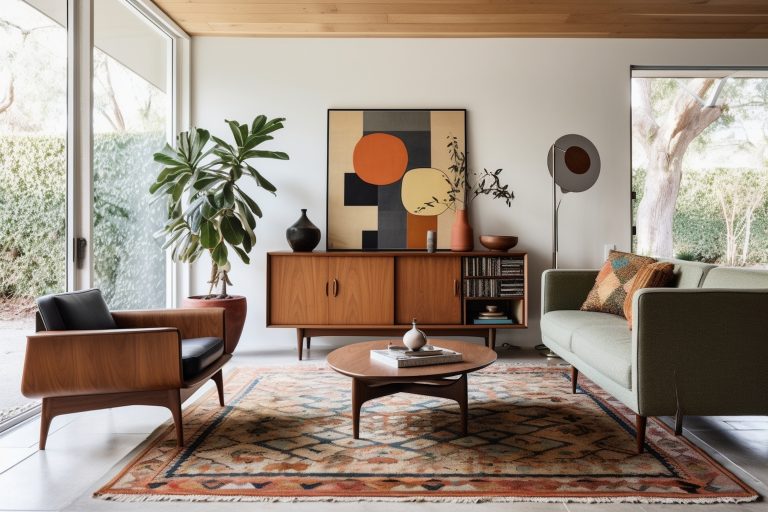
The living room is where most people want to make a pattern statement, and for good reason—it’s typically the largest space and the one where you entertain. Start with your biggest piece: the sofa. If you’re going with a patterned sofa, keep it to a medium or large-scale design that won’t feel busy when you’re sitting on it for hours.

For a solid sofa, you have more freedom with pillows and throws. Try this reliable formula: one large-scale pattern on your biggest pillows, a medium geometric on smaller pillows, and a textural throw that bridges everything together. Your rug can handle patterns if your furniture is mostly solid, but if you have patterned upholstery, consider a subtle textural rug instead.

Window treatments offer another opportunity for pattern, but consider their relationship to your seating. Busy patterns at eye level can be distracting, so if your curtains hang near seating areas, opt for subtle patterns or solids with interesting textures.

how to mix pattern in a room example

Bedroom

Bedrooms require a more delicate approach to pattern mixing. While you want visual interest, the space still needs to feel restful. The bed naturally becomes your focal point, so start there when figuring out how to mix patterns in a room designed for sleep.

Layer patterns on the bed, starting with your largest scale on the duvet or comforter. Add medium-scale patterns through Euro shams or decorative pillows, then incorporate small-scale patterns or textures in accent pillows and throws. The key is creating layers that can be adjusted—you might want all the patterns during the day but prefer simplicity at night.

If you’re using patterned curtains in the bedroom, ensure they complement rather than compete with your bedding. A good rule: if your bedding is bold, keep window treatments subtle, and vice versa. An upholstered headboard in a small-scale pattern or interesting texture adds another layer without overwhelming the space.

three patterns mixed successfully

Dining Room

Dining rooms offer unique opportunities for pattern play because you’re working with different elements than in living spaces. Chair upholstery is your primary canvas—consider a medium-scale pattern that’s sophisticated but not so busy it competes with food presentation or table settings.

For formal dining rooms, mixing patterns through table linens adds flexibility. You can change the mood entirely by switching between patterned and solid table runners, placemats, and napkins. If your chairs are patterned, keep table linens simpler. Solid chairs? Go bold with your table settings.

Don’t forget the walls—dining rooms can handle more dramatic pattern choices since you typically spend less continuous time in them. A bold wallpaper or large-scale art creates a stunning backdrop for dinner parties.

balanced pattern combination interior

Small Spaces

Small rooms require strategic thinking about pattern scale and placement. The old rule about keeping small rooms simple? Ignore it. Small spaces can absolutely handle patterns—you just need to be thoughtful about scale and contrast.

In powder rooms, entries, and other compact spaces, one statement pattern can actually make the room feel larger by creating a focal point. The key is choosing patterns with movement and depth rather than flat, repetitive designs. A wallpaper with perspective or a pattern that draws the eye upward can visually expand the space.

For small bedrooms or living areas, focus on how to mix patterns in a room without cluttering. Use the same colour palette throughout your patterns to create flow, and ensure at least one pattern has plenty of negative space to prevent the room from feeling cramped.

Advanced Pattern Mixing Techniques

Once you’re comfortable with the basics, these advanced strategies will elevate your pattern game even further.

The Bridge Pattern Method

This technique uses transitional patterns that share elements from your other patterns, creating seamless connections throughout the room. For example, if you have a floral with blue and green plus a geometric in blue and white, your bridge pattern might be a subtle stripe incorporating all three colours.

Bridge patterns often work best in smaller doses—on lampshades, small ottomans, or throw pillow piping. They’re the supporting actors that help your star patterns shine while creating cohesion.

The Neutral Pattern Base

Starting with patterns in neutral colours—think cream-on-white damask, grey herringbone, or taupe geometric—creates a sophisticated foundation. These patterns add visual texture without committing to colour, giving you the flexibility to layer in colourful patterns through easily changeable elements.

This approach works particularly well if you like to update your space seasonally or if you’re still developing confidence in mixing patterns. Build your neutral pattern base through larger investments like rugs and upholstery, then play with colourful patterned accessories.

Cultural Pattern Mixing

Combining patterns from different design traditions creates rooms with real character and depth. A Persian rug, African mud cloth pillows, and Scandinavian geometric throws might sound chaotic, but when unified by colour or scale, they create globally inspired spaces that feel collected over time.

The key is respecting each pattern’s cultural significance while creating harmony through your mixing principles. Avoid using sacred or ceremonial patterns as simple decoration, and research the meanings behind patterns that interest you.

types of patterns to mix together

Common Pattern Mixing Mistakes to Avoid

Even experienced decorators stumble over these pattern-mixing pitfalls. Recognising them helps you sidestep issues before they derail your design.

Competing Focal Points happen when multiple patterns fight for dominance. If your eye doesn’t know where to land first, you’ve created competition rather than harmony. Every room needs a clear hierarchy—one pattern leads, others support. When two bold patterns of similar scale occupy the same sightline, neither can properly shine.

Ignoring the Room’s Purpose leads to pattern choices that work against how you actually use the space. A home office filled with busy, high-contrast patterns might look stunning in photos but prove distracting during work hours. Similarly, ultra-formal patterns in a family room where kids play daily creates unnecessary stress. Always consider function alongside form.

Forgetting About Existing Furniture is surprisingly common when people get excited about pattern mixing. That wood grain dining table? It’s adding a pattern. Your leather sofa’s texture contributes visual weight. Before adding new patterns, catalogue what you already have—including wood tones, metal finishes, and textural elements that affect your overall pattern story.

Scale Mishaps in Small Rooms occur when people automatically default to tiny patterns in compact spaces. Counterintuitively, one large-scale pattern often works better than several small ones in tight quarters. Small, busy patterns can make a room feel cramped and cluttered, while a single bold pattern can actually expand the visual space.

Quick Pattern Mixing Formulas

Think of these formulas as training wheels—use them to build confidence, then adapt as you develop your own style. Each formula shows you how to mix patterns in a room with guaranteed harmony.

Classic Formula: 1 Geometric + 1 Floral + 1 Solid
This timeless combination works in any style of room. Your geometric provides structure (stripes, lattice, or Greek key), your floral adds organic movement (contemporary or traditional), and your solid grounds everything. The key is ensuring these three elements share at least two colours.

Modern Formula: 2 Abstracts + 1 Linear + Textural Solids
Perfect for contemporary spaces, this formula plays with artistic patterns. Choose two abstract patterns in different scales—perhaps a large watercolour-inspired print and a small organic dot pattern. Add one clean linear element like stripes or a grid, then balance with textural solids in linen, wool, or nubby cotton.

Eclectic Formula: 1 Ethnic + 1 Contemporary + 1 Traditional
This formula creates a collected-over-time appeal. Mix a global pattern (ikat, suzani, or mud cloth), a contemporary geometric, and a traditional element like toile or damask. The unexpected combination works when unified by a consistent colour story or similar pattern weights.

[Image placement: Visual formula guide showing each combination with real room examples and pattern swatches]

Remember, these formulas are starting points, not rules. Once you understand why they work—the balance of structure and flow, the varied scales, the unifying elements—you can create your own combinations with confidence.

Mastering how to mix patterns in a room transforms your decorating from safe to sophisticated. We’ve covered the essential principles—varying scale, following the 60-30-10 colour rule, and working in odd numbers. You now understand how different pattern categories interact and have specific formulas to try in your own space.

11 Tips For The Ultimate Living Room Table Decor

11 Tips For The Ultimate Living Room Table Decor

Want to know the best way to elevate your living room table decor? These are the ultimate tips to help you elevate and transform the look and feel of your living room through decor. Living Room Table Decor

Picture this: You walk into a beautifully designed living room, and your eyes are instantly drawn to the elegant arrangement on the coffee table. It’s a colour, texture, and style masterpiece, effortlessly tying the entire room together. That’s the magic of living room table decor – it can serve as a focal point for the room and a place to showcase your personal style.

From choosing a theme, selecting styling and decorative objects and keeping functionality in mind, this post is your ultimate guide to bringing your living room together.

This post is about achieving the best living room table decor.

Best Living Room Table Decor Tips

1. Start With A Blank Canvas

Simple Coffee Table Decor

The first step to creating stunning living room table decor is to start with a blank canvas. A cluttered table can be visually overwhelming and distract from the decor’s intended theme. Starting with a clean slate provides visual clarity and lets each decorative element stand out.

Start by removing all items from your table, this includes remote controls, magazines, coasters and any other items used daily. Take this opportunity to declutter and consider whether all the items you removed are essential, if not, find homes for the things that don’t belong on your table.

2. Choose A Theme

Side table decor

Choosing a theme sets the foundation for your entire decor arrangement, making sure that your living room table tells a cohesive and visually appealing story. Start by considering your personal style and the style of your living room, your theme should reflect your taste and the overall ambience you want to create.

Think about how the living room is used and look around your space for any existing elements or colours that you want to incorporate. Your theme should align with your room’s purpose, is it primarily a cosy family space, a formal entertainment area, or a multi-purpose room?

3. Think About Functionality

Living Room Table Decor Pinterest

Your living room table should be more than just a surface for displaying pretty objects. It should serve a purpose to make your life easier and more enjoyable. A functional table can adapt to various needs from a coffee table for casual gatherings, a dining table for TV dinners, a workspace for your laptop, and even a storage solution for everyday essentials.

While it’s important to create a beautiful and stylish living room table, it’s also important to consider functionality. Make sure you leave enough space for drinks and snacks, and choose decor that won’t get in the way of everyday use. You can also use decorative objects and keep your living room table organised.

4. Add Your Personal Touch

Simple Living Room Table Decor

Each item on your living room table should have a story to tell so begin by selecting items that hold significance for you. The goal is to create an emotional connection with your living room table decor. Every time you glance at a particular item, it should invoke a feeling, memory, or a sense of nostalgia.

These could be family photographs, travel souvenirs, heirlooms or mementos from special occasions. To maintain a harmonious balance in your decor, blend your personal items with other decorative elements that work with your chosen theme. For instance, you can place a family photograph in an elegant frame positioned alongside decorative candles, a vase of fresh flowers or a stack of coffee table books related to your interests.

5. Stick To A Colour Palette

Modern Living Room Table Decor

When it comes to living room table decor, your colour palette sets the tone for the entire room. One of the advantages of sticking to a cohesive colour palette is the visual consistency it provides. To ensure a seamless integration, take into account the existing colour scheme in your living room. Your table decor should not compete but complement the colours present in your room.

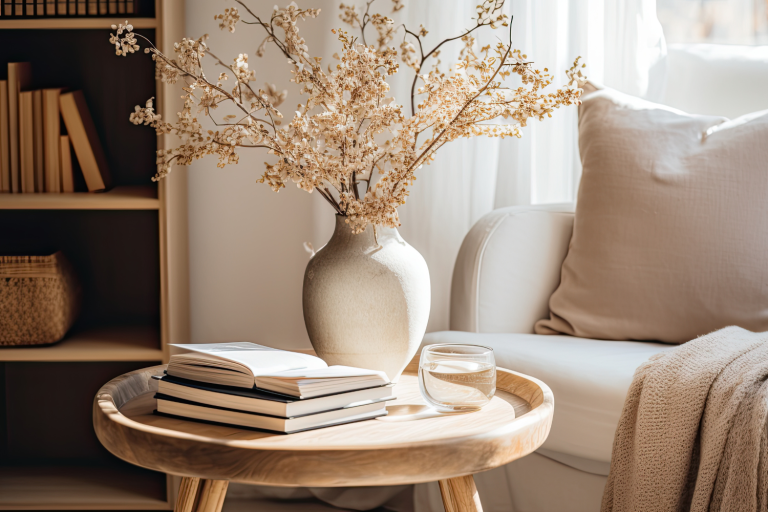
A well-thought-out colour palette is not just about paint and fabric. Texture plays an integral role in creating depth and interest in your living room table decor. Blend different materials like wood, glass, metal, and ceramics to add visual interest to your setup. The variety in textures will make your colour palette feel richer and more engaging.

6. Layering Your Pieces

Coffee Table Decor Ideas With Tray

Layering will add depth, texture, and visual interest to your table, preventing it from looking flat and one-dimensional. It allows you to showcase your personality and tell a story through carefully selected items and pieces that have meaning to you.

Every beautifully layered design starts with a strong foundation, which In this case your foundation is the table itself. Consider the size, shape, and material of your table when selecting pieces. Layers can be built vertically by using vases, flowers and candles, and horizontally using decorative bowls, coasters and other decorative objects.

7. Creating Balance & Symmetry 

Elegant Centrepieces For Coffee Tables

Balance & symmetry is a powerful design concept that can transform your space. By selecting the right table, arranging decor elements with symmetry and paying attention to height and colour, you can create a beautiful and balanced living room table. A square or rectangle table works well with a more structured and symmetrical decor approach, while a round or oval table can soften the look for a more organic feel.

To achieve balance, it’s essential to consider the height and visual weight of the items you choose, layering different heights and textures adds depth and dimension to your decor. It’s common to have a central focal point, this could be a large centrepiece or a captivating piece of artwork. A well-balanced and symmetrical living room table should also consider colour harmony, which can help achieve a sense of balance.

8. Add Greenery 

Living Room Side Table Decor

One of the most effective ways to infuse life and vibrancy into your living room table decor is by incorporating greenery. Indoor plants not only add a touch of nature but also breathe fresh air into your space, and transform the ambience of your living room, making it feel more inviting, relaxed, and visually appealing.

They provide a natural, organic element that balances the often man-made materials in your living room, while the vibrant colours of the leaves create a visually pleasing contrast against the typical furniture and decor. When selecting plants for your living room table decor, consider factors such as lighting, care requirements, and the aesthetics of your space. Elevate your greenery with decorative planters that match your decor style. Vintage containers, geometric pots, or metallic finishes can add character to your display.

9. Style With Books

Glass Coffee Table Decorating Ideas

Before you begin arranging your living room table with books, consider the purpose you want them to serve. Books can be more than just decorative objects; they can also provide entertainment and information.

The selection of books is crucial when styling your living room table, so try to opt for books that resonate with your interests, hobbies or the overall theme of your living space. Books work beautifully when paired with decorative objects. Add vases, candles, or small sculptures that harmonise with your chosen books. This mixture of textures and elements creates a balanced and inviting look.

10. Edit & Rotate

Living Room Table Decor Ideas

Mastering the art of editing and rotating your living room table decor is the key to achieving an ever-evolving and captivating space. By carefully curating your decor items and periodically refreshing your table setup, you can transform your living room into a dynamic and visually appealing showcase of your style and personality.

When it comes to living room table decor, remember: less is more. An important step in editing is decluttering. Start by removing any items that no longer serve a purpose or don’t contribute to the overall aesthetic of your living room. One of the joys of table decor is the ability to reflect the changing seasons and holidays. Embrace the art of rotation by updating your living room table to suit different times of the year.

11. Follow Your Intuition 

Living room table decor is an art that goes beyond following strict rules. It’s about following your intuition, embracing your unique style, and creating a space that reflects your personality. By listening to your inner designer, you can transform your living room table into a captivating centrepiece that tells your story and makes your home a true reflection of you. So trust your instincts, get creative, and watch your living room table decor come to life in a way that’s perfect for you.

This post was all about giving you the ultimate tips for mastering living room table decor.